
Most villa searches settle the big questions early. You know you want a villa instead of a hotel. You know how to spot a legitimate listing from a scam. The harder question comes next. Among the dozens of real, professionally managed villas in a region, which one delivers what you’re actually paying for?
This is where most searches go wrong. People evaluate villas the way they evaluate hotels: photographs, amenity lists, star ratings. A villa is a different kind of product. A hotel’s quality comes from brand standards applied across a portfolio. A villa’s quality comes from one piece of land, one architect’s decisions, and one household’s competence. None of it repeats anywhere else. Choosing well means reading the property itself, not the listing.
Measure privacy. Don’t take it on faith.
Every villa listing claims privacy. Few define it. The claim means nothing until you turn it into distance, sightlines, and density.
Ask concrete questions. How far is the nearest neighboring building? Is there a real buffer between it and your outdoor space: trees, a rise in the land, a solid wall? Do other rental villas surround the plot, turning over on the same weekly schedule as yours, so a new set of strangers arrives next door every seven days? Does the pool or terrace face the property’s own garden, or does it face a road, a shared driveway, or a neighbor’s balcony? A villa can sit on a large plot and still fail this test if nobody sited the building with privacy in mind.
Rural estate agents draw a useful line between land that does something and land that just looks good in photos. A big plot with no real separation from what surrounds it is decorative buffer. It photographs as space without functioning as privacy. A smaller plot, carefully walled or planted or raised above its surroundings, often delivers more real seclusion than a sprawling one with thin boundaries. Before you book, ask your villa specialist for a site plan or satellite view, not just interior photos. It tells you more than any adjective in the listing.
Check whether the architecture belongs to the place
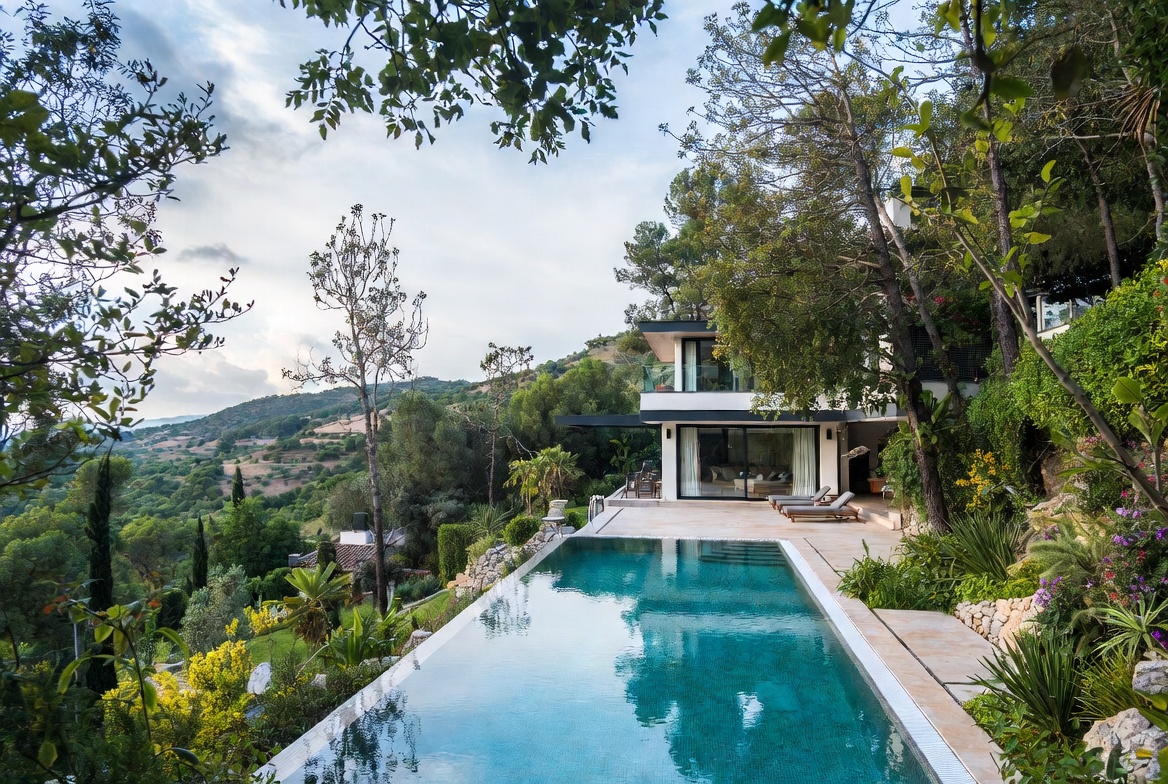
Quiet luxury has a real look: restraint, natural materials, no visible logos. That look is also easy to fake now. A villa can wear the right materials, the right neutral palette, and the right soft lighting in its photos without any of it reflecting how the building was designed. The tell sits in the relationship between the structure and its setting.
Vernacular architecture solved real problems posed by a specific climate and way of life. A Portuguese quinta built low and thick-walled against the Alentejo heat. A Cycladic house whitewashed and closed off on its exposed side. A Tuscan farmhouse built around a working courtyard. These solutions tend to produce what quiet luxury is actually chasing: deep shade, cool stone floors, thick walls that quiet sound, a clear path from public rooms to private ones. A villa built or restored on that logic usually delivers the feeling. A villa built to a generic “Mediterranean villa” template, finished in the same neutral palette, often delivers the look without the substance: glass walls that trap midday heat, open-plan rooms with nothing to absorb sound, a building that photographs well and is hard to live in for a week.
The Finnish architect Juhani Pallasmaa argued that design culture now favors the eye over every other sense, so buildings get designed to be photographed rather than inhabited. That costs the qualities that actually determine whether a space feels good to spend time in: touch, sound, temperature, the weight and warmth of materials underfoot. A villa chosen from photos alone gets chosen on the one sense Pallasmaa says architecture shouldn’t be built around. Ask what the villa is built from, how old the structure is, and whether the design responds to the local climate or just borrows its palette. A specialist who answers in detail usually knows the property. One who can only describe the look of it may know no more than the listing does.
Ask what you’ll hear, not just what you’ll see

Sound is the dimension buyers check least and regret most. A villa can have flawless architecture and grounds and still fail on acoustics no photo will show you: a shared wall with the villa next door, a main road audible from the pool at night, tile and glass surfaces that turn footsteps and conversation into an echo, a neighbor running a generator or a construction crew nobody mentioned.
Ask this directly, as its own question rather than folding it into general privacy talk. What can you hear from the terrace at 7pm? From the bedroom at midnight? A good specialist who has visited the property in person, not one relying on the owner’s own description, should answer without hesitating. If they can’t, that tells you something on its own.
Match the staffing model to what you want
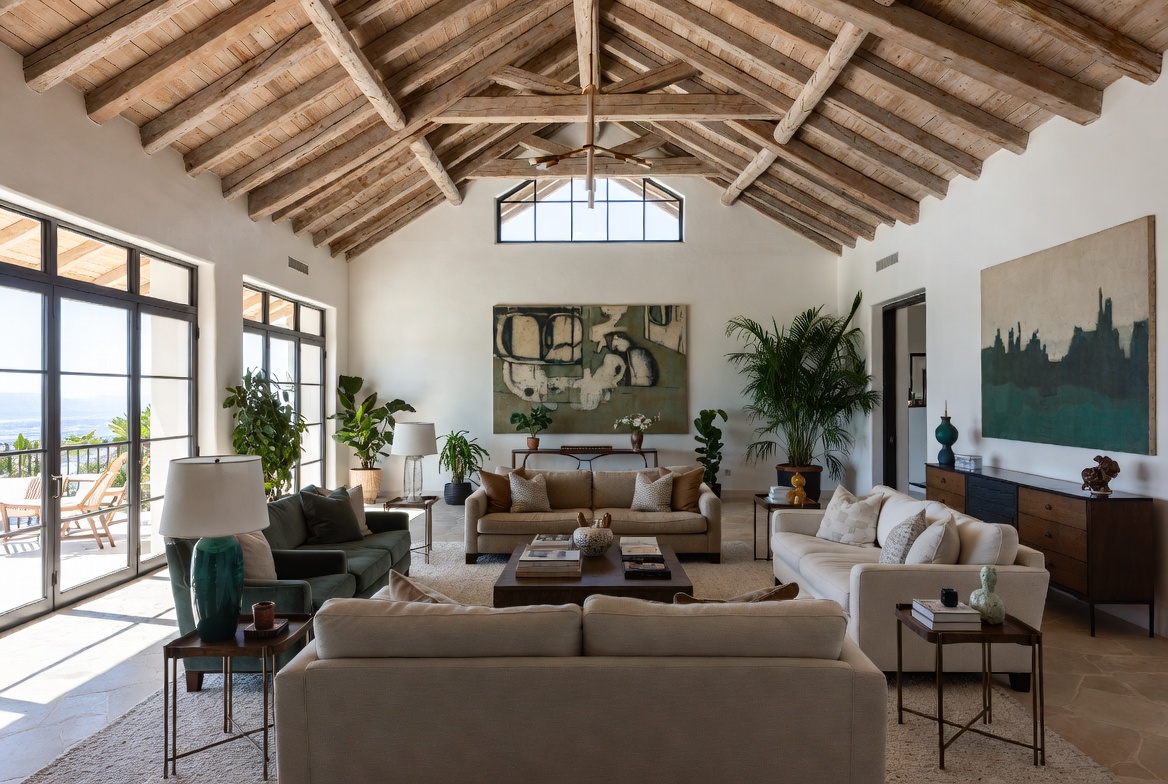
“Fully staffed” is one of the least consistent phrases in villa marketing. Treat it with real skepticism until someone spells it out in writing. At the low end it can mean daily housekeeping and an emergency number. At the high end it means a coordinated household: a manager who runs the property day to day, a butler who handles formal service, a private chef, often a driver, all working as one team instead of separate contractors who happen to share a client that week.
The difference matters most in how the stay feels. A villa with services on request suits people who want a home base and don’t mind managing some of it themselves: deciding when to eat, calling the pool cleaner, running their own days. A fully staffed villa suits people who want hotel-level responsiveness without leaving the building: meals on schedule, laundry handled without being asked, a household already briefed on your preferences before you arrive. Neither model is more genuinely “quiet luxury” than the other. The mistake is booking one while expecting the other and finding out the gap on day one.
Ask who will be present and for how many hours a day. Ask whether staff live on site or arrive each morning. Ask whether the same team covers the full stay or rotates. A single manager overseeing a large property alone plays out very differently from a full household team, even when both listings use the phrase “staffed villa.”
Fit the scale to how you’ll actually use it
A villa can be too small for its ambitions or too large for its intimacy. Both mistakes happen often. A property with grand public rooms and a serious kitchen but only three usable bedrooms feels unbalanced for a group of six. A ten-bedroom estate booked by two people can feel less private than a well-sited three-bedroom house: too much unused space to feel occupied, and often too large for a small staff to service with real attention.
Picture an ordinary afternoon in the space, not the arrival photo. Where does the group actually gather? Does each bedroom have its own outdoor space, or does everyone share one terrace? If you’re traveling as a couple within a larger family group, is there a separate wing or guesthouse, or only a closed door down the same hall? Listings sell on headline numbers: bedroom count, pool length, acreage. The qualities that decide whether a stay feels quietly luxurious or just large live in the proportions, not the totals.
Who this isn’t for
If you want company on demand, a bar to wander down to, other guests to watch, staff visible without being summoned, a small hotel will serve you better than even an excellent villa. Solitude is the villa’s core offer. That’s a real trade-off, not a footnote. Groups without a clear decision-maker often struggle with the format too. A villa concentrates logistics, meal timing, and shared-space decisions in a way a hotel simply absorbs, and that can create friction in a group that hasn’t settled who decides what. And if the infinity pool and the styled interiors are what drew you to a villa in the first place, be honest that the qualities this piece argues for (acoustics, siting, staffing, proportion) stay largely invisible in a listing. Weigh them more heavily than the photos that sold you on the property.









Leave A Comment