

The most sought-after thing in travel right now isn’t a thing at all. It’s an absence — no crowds, no itinerary, no buzzing phone, no one who can reach you. At a resort in the Maldives you can only get to by seaplane, the first thing they ask you to do is put your phone away. At a clinic above Lake Geneva, the headline purchase isn’t a suite but a number: your own biological age. And across the hill towns of Tuscany, the people who know what they’re doing are booking for late October, after the coaches have rolled out for the season.
For twenty-odd years, luxury travel worked hard to be seen — infinity pools framed for the lens, overwater villas with a butler on call, trips designed to photograph well before they were lived at all. That whole vocabulary is being rewritten in 2026, and quietly. The status symbols that matter now are the ones a camera can’t capture: quiet, space, unstructured time, privacy, and the rare freedom of being unreachable. This is quiet luxury travel.
The idea started in fashion, but it has moved decisively into how wealthy people travel — and the reports the industry watches most closely all say the same thing. Virtuoso’s 2026 Luxe Report, built on responses from a record 2,485 travel advisors in more than 50 countries, found that affluent travelers have stopped wanting luxury for its own sake and started building trips that feel personal, restorative, and worth the time. American Express, in its 2026 Global Travel Trends Report, described a traveler who is “incredibly intentional” about every day away. And hospitality forecasters gave the whole mood a name — “hushpitality” — for the growing class of places selling calm instead of spectacle.
What follows is a look at what quiet luxury travel really means this year, what’s driving it, the specific shifts shaping it, and the awkward questions that come with putting a price on silence.
From the wardrobe to the world
Quiet luxury — cousin to “stealth wealth” and the “old money aesthetic” — is a style built on restraint: fine materials, real craftsmanship, muted colors, and no visible logos anywhere. Loud luxury broadcasts the price. Quiet luxury murmurs it, and only to people who already know how to hear it. The impulse is old, resurfacing whenever showy spending starts to look a little crass — as it did after the 2008 crash — but the wave that crested around 2023, once a decade of logo-drenched excess had worn everyone out, refused to stay in the closet.
It grew into a whole way of living, travel included. The core belief translated cleanly: real luxury is being able to shut out the noise and attend only to what you actually want, letting substance do the signaling instead of display. On the road, that looks like choosing the unmarked villa over the famous resort, the empty valley over the packed viewpoint, and a trip built to be felt rather than filmed.
The numbers behind the movement
Quiet luxury travel rests on a huge and still-expanding market — one commonly cited figure pegs global luxury travel at around $1.83 trillion in 2026 — and every serious forecast agrees the sector keeps climbing while economic nerves rattle plenty of other industries.
Demand, in particular, has held up. Virtuoso found that 67 percent of advisors expect travel demand to rise in the coming year, 18 percent of them by a lot, and almost none expect any drop at all. American Express heard the same thing worldwide: roughly 80 percent of people plan to take as many international trips in 2026 as last year, or more, even with the economic and geopolitical unease that has made other sectors hesitate.
The shift isn’t in how much people will spend — it’s in what they expect back. Virtuoso put it plainly: clients aren’t after flash anymore; they want space, soul, and value. The money is still there, too. Fifty-five percent of advisors expect clients to spend more per trip and another 28 percent expect them to spend about the same, which leaves only a sliver anticipating any pullback. But the spending now carries conditions. Travelers want every dollar to buy something restorative and genuinely their own, not just something that photographs like money. That conditional spending is what powers quiet luxury. The traveler who once paid extra for a name everyone recognizes now pays extra for the reverse: a place no one has heard of, a shoreline with no one on it, a week with nothing on the calendar.
Trend one: crowd control

If one idea sits underneath quiet luxury travel in 2026, it’s the hunt for space. Virtuoso made “Crowd Control” the first of its headline trends, casting a mild climate and the room to enjoy a place without elbowing through crowds as the new meaning of luxury. Dodging overtourism has, tellingly, become the single most important part of sustainable travel for this crowd.
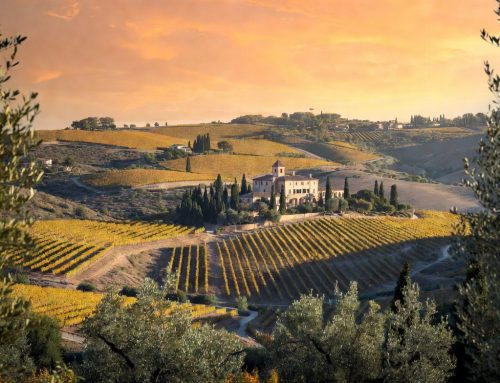
The escape from crowds is redrawing the map. Advisors told Virtuoso their clients are increasingly drawn to cooler, quieter places — Greenland, Iceland, Norway, Antarctica — precisely because there’s no one else there. For those who still want the icons, the trick is timing: 76 percent of advisors reported requests for off-peak travel, which is filling the shoulder seasons in favorites like Italy and France. In practice, it means booking a Tuscan villa for late October, when the harvest is in and the light turns gold, instead of grinding through the August heat in Florence, where a queue for the Uffizi can eat a whole morning.
None of this is happening in isolation. It answers a genuine, worsening overtourism problem. Skyscanner found that nearly a third of travelers had felt overtourism’s downside firsthand, and about the same share were already steering toward quieter places because of it. The strain has been hard to miss: recent summers brought anti-tourism protests across Spain, with residents in Barcelona and Mallorca aiming water pistols at visitors, while cities from Venice to Amsterdam layered on higher tourist taxes and cruise-ship limits. Climate worry pushes in the same direction — 45 percent of Virtuoso advisors say clients are reshaping plans around it, avoiding extreme heat in favor of temperate, uncrowded alternatives.
For the luxury traveler, crowds have become the thing luxury is now defined against — and the way you buy privacy is through distance, low density, and careful timing, not through gold trim.
Trend two: hushpitality and the deliberate disconnect
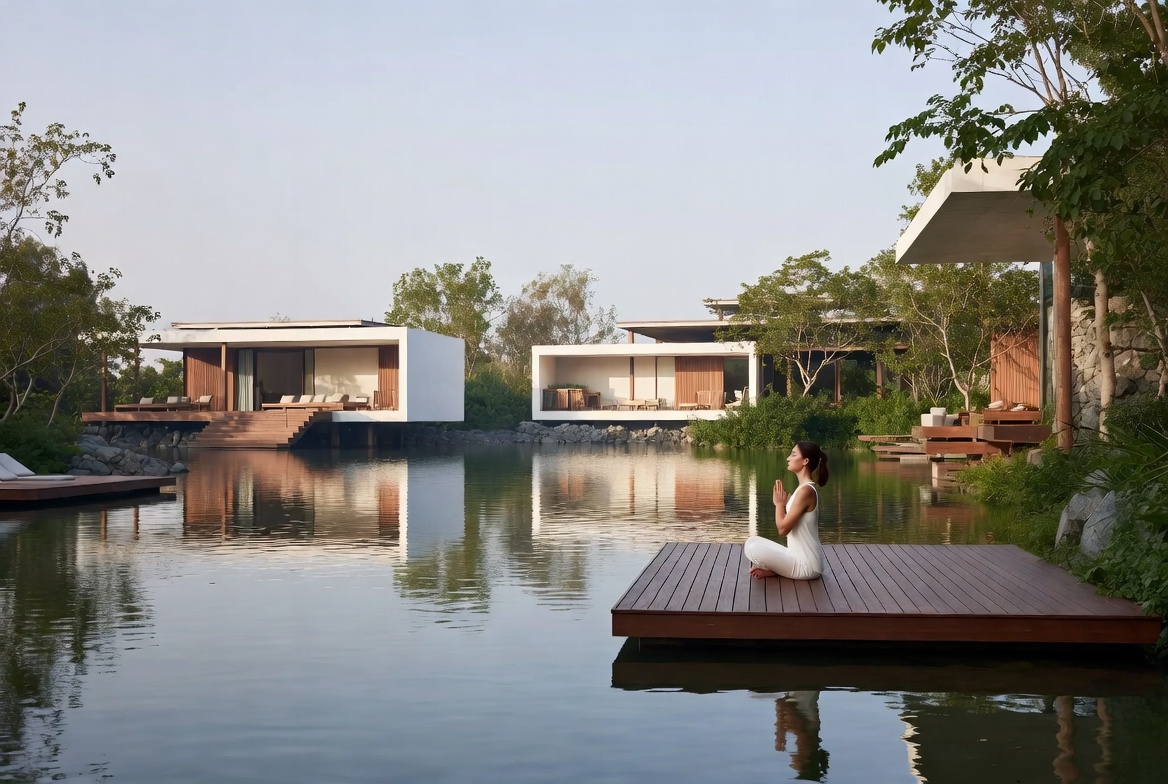
If crowd control is about where you go, hushpitality is about what you do once you’re there, which is ideally not much. A growing set of properties is built around quiet as the actual product, treating silence, rest, and the option to switch off as the point rather than a perk.
The best of them treat that quiet as something the setting already holds, not something staged: buildings placed well away from density, spacing that guards privacy by sheer distance, natural sound left to carry, and service that reads your presence instead of intruding on it. The aim isn’t isolation but control — being able to lean in or step back without any effort. In a life saturated with information and permanent connection, unbroken calm has turned genuinely rare, and travel is one of the last reliable places to find it.
All of this feeds a “digital detox” movement that long ago outgrew the fringe. Properties are building around it. At Six Senses Laamu, a barefoot island you reach only by seaplane, the day bends around sunrise meditation, dark-sky stargazing, and marine-conservation dives rather than a packed activity sheet, and many Six Senses resorts now run a formal “digital detox” where guests hand over their devices at check-in. But the 2026 version is subtler than going cold turkey. Instead of a heroic off-grid disappearance, most travelers want a middle setting: an optional phone basket at dinner, “connectivity with boundaries,” enough signal to send one photo but enough distance from work and alerts to sleep a full eight hours. That balance is really what quiet luxury hospitality is — not deprivation dressed up as wellness, but the quiet, almost invisible stripping-away of friction and noise until what’s left is just being there.
Trend three: wellness and longevity as the new status

Wellness and luxury travel have become hard to separate. Virtuoso raised it to a core trend for 2026, noting that restorative trips — spa escapes, nature retreats — are now central, especially for solo travelers and couples. The scale is real: the wider wellness tourism market, worth about $990 billion in 2025, is on track to more than double to roughly $2.4 trillion by 2035, growing near 9.3 percent a year, well ahead of travel overall, according to Grand View Research.
What sets the 2026 version apart is that it has gone clinical and longevity-minded. Travelers are moving past the massage-and-facial break toward programs measured against long-term health: better sleep, metabolic markers, preventive diagnostics, one-on-one coaching. The flagships look increasingly like laboratories. At Clinique La Prairie on Lake Geneva, a longevity pioneer running since 1931, guests get biological-age testing, deep bloodwork, and regeneration protocols meant to play out over years, and the brand is now taking that model abroad with a new health resort opening in Phuket in 2026. At Lanserhof’s Alpine and North Sea clinics, the week is built around the exacting Mayr cure — medically supervised fasting and gut resets designed to change how you live, not just how you feel for a few days. Mainstream hotels are chasing the same ground: Four Seasons has rolled out sleep-revitalization therapies, and Corinthia London launched a wellness concept that blends nature-led and science-led treatments.
It fits the quiet luxury temperament perfectly. Where showy luxury was about being seen, longevity-driven wellness is about investing privately in yourself — in health, recovery, and time, which are arguably the most exclusive assets going. The new flex isn’t a tan or a monogrammed trunk. It’s a deep night’s sleep and the feeling of having actually rested.
Trend four: depth over breadth

The first three shifts cover where you go and how you recover. The fourth is about how you engage once you’re there, and the 2026 forecasts point the same way on both — go deeper, not wider. Luxury travel is turning away from how many places you can tick off and toward how completely you can settle into one.
On the face of it, that means slowing down. Travelers are swapping rigid, checklist itineraries for fewer, longer stays — the “soft life,” as people like to call it: the long, drifting lunch instead of the 7 a.m. coach; an unrushed spa slot and an afternoon swim instead of a jammed schedule; a whole week in one Umbrian farmhouse rather than a five-city dash. It quietly helps the planet too, since fewer and longer trips mean less of the frantic, extractive churn that fuels overtourism to begin with.
The deeper change is what fills that slower time: a move from watching to doing. Passive sightseeing is starting to feel thin, and the experiences people prize are hands-on and hyper-local. American Express calls it “Sight-Doing” — a tortilla class in Mexico City or a perfume workshop in Paris instead of just photographing the monument — and the appetite runs young: 79 percent of surveyed millennial and Gen Z travelers say they’ll seek out a local workshop on their next trip, and most travelers of any age now figure a skill picked up on the road outlasts any souvenir.
What holds it together is a rejection of performance. The quiet luxury traveler wants low-key, privileged access to the real texture of a place rather than to be funneled through it with ten thousand others — a private dawn walk through the Marrakech souks before the gates open, a rooftop dinner the public never sees, the kind of cinematic, behind-the-curtain access the Royal Mansour trades in. American Express names the same urge in another of its trends, “Lore Chasing”: the goal is to come home with a story genuinely worth telling, not a camera roll that looks like everyone else’s.
Where the quiet luxury traveler is going in 2026
The destinations picking up speed tell the story. The cold, quiet frontier — Greenland, Iceland, Norway, Antarctica — is rising because it delivers solitude and the feeling of standing somewhere barely touched. Among the classics, the momentum is toward shoulder-season trips to Italy, France, and Japan, taking in the great cities without the crush.
Running alongside it is “soft life” travel built around stillness in beautiful, lower-key settings: an Alpine swim in Switzerland in early summer, a long lunch on a Greek island in September, Mallorca at May’s unhurried pace. Private islands and low-density boutique retreats across the Caribbean, the Mediterranean, and the South Pacific are pitching themselves on seclusion, wellness-first living, and plainness over visible extravagance. The thread throughout is discretion — places that still feel undiscovered, or at least carefully shielded from overexposure.
Who is driving the shift

It’s tempting to assume quiet luxury travel belongs to older, settled money. The truth runs closer to the opposite: younger affluent travelers are among its most committed adopters. American Express found that 74 percent of surveyed millennials and Gen Z treat travel as a “non-negotiable” line in the budget, and plenty would take a job with fewer perks for the freedom to travel more. They also build trips around meaning rather than mileage — nearly 9 in 10 Gen Z travelers plan around milestones like birthdays, reunions, and anniversaries, against barely half of baby boomers, and Virtuoso ranked “celebrating a milestone” as the single biggest reason affluent travelers give this year, ahead even of seeing somewhere new. For a generation raised inside digital saturation, quiet luxury isn’t self-denial; it’s a way to take back attention and real connection in a world engineered to splinter both.
How they book is just as revealing. For all that travel has gone online, the top end stays stubbornly human: the vast majority of ultra-luxury travelers still lean on advisors to shape their trips. In a world running on privacy, access, and discretion, the trusted go-between who can land the unlisted villa or the after-hours visit is worth more than ever, not less.
The tensions: can silence really be sold?
For all it has going for it, quiet luxury travel carries a few uncomfortable contradictions.
The first is built into the premise. Something sold as quiet and undiscovered stops being either the moment word gets out. The day an influencer or a glossy report anoints Greenland or some “secret” island the new escape from the crowds, the crowds start booking flights — and these fragile, thinly settled places cope with a rush of big spenders far worse than the old hubs ever did. Quiet luxury risks just relocating overtourism to the spots least able to take it.
The second is greenwashing. Once “wellness,” “sustainable,” and “off-grid” turn into things you can charge a premium for, the gap between doing the work and just printing the label widens fast. A basket for your phone at check-in and a paragraph of soothing copy don’t add up to either.
The third cuts deepest. Strip away the language of calm and intention, and quiet luxury is, at bottom, the ability to pay not to be around other people. Solitude and untouched nature are scarce by definition, and scarce things go to whoever bids highest. So as crowded places push back — Venice charging day-trippers to enter, residents in Barcelona and Mallorca marching against the tourism that priced them out of their own streets, national parks parceling out access with timed-entry permits — a two-tier world comes into focus. The wealthy buy their way over the top of it: the private island, the off-season villa, the entry slot an advisor locked in months ago. Everyone else gets the caps, the queues, and the rising taxes meant to manage them. The “new luxury” of skipping the crowds turns out to be the oldest luxury there is — being rich enough that the rules other people live by don’t quite reach you.
And the communities on the receiving end rarely get a say. The very search for somewhere “undiscovered” that thrills the traveler can gut a village — pushing up rents, flipping homes into short-term rentals, and squeezing out the locals whose ordinary daily life was the authenticity being sold in the first place. The quiet a guest pays a premium to enjoy is often someone else’s home going quiet for all the wrong reasons.
None of this makes the trend a fraud; it’s a real and welcome turn away from look-at-me excess toward something calmer and more considered. But it’s still a product. And like every luxury before it, the harder it works to feel effortless and exclusive, the more worth asking who ends up footing the bill.
What this means for travelers in 2026
If you want to travel in the spirit of quiet luxury this year — at any budget — a handful of practical moves do most of the work:
- Travel off-peak, on purpose. Moving a trip by even a couple of weeks changes everything. Aim for shoulder season (May or September in the Mediterranean, autumn in Italy, late spring in the Alps), when prices soften, crowds thin, and the weather is often better than at peak. You see more by seeing it without a line.
- Stay longer in fewer places. Fight the urge to collect destinations. Settling into two unhurried bases instead of racing through five lets you build a real relationship with a place — and usually costs less in transfers, internal flights, and sheer exhaustion than a crammed itinerary.
- Choose low density over big names. A small boutique hotel, a private villa, or a low-occupancy lodge will almost always feel more luxurious than a 400-room flagship, whatever the star rating. Ask about room counts and how spread out a property is before you book.
- Build in genuine disconnection. Set your boundaries before you arrive rather than relying on willpower in the moment. Turn on an auto-reply, agree on one daily check-in window with work, and pick at least one property or stretch of the trip where weak signal is a feature, not a fault.
- Spend on experiences, not optics. Point your budget at things that restore or teach you — a multi-day wellness program, a cooking class with a local family, a guided walk with an expert — rather than the most photogenic suite. The skill or the rest tends to outlast the photo.
- Use a specialist for access, not just booking. The genuinely uncrowded villa, the after-hours museum visit, the off-season rate — these are often unlisted. A good travel advisor earns their fee right here; if you’re planning solo, lean on destination-specific local operators rather than generic aggregators.
- Be honest about your footprint. Quiet, fragile places are the easiest to overwhelm. Travel in smaller groups, spend your money locally, follow the rules in sensitive destinations, and treat “undiscovered” spots with the care that keeps them that way.
Conclusion: the loudest trend in travel is silence
The great irony of 2026 is that the most talked-about movement in luxury travel is one built on quiet. After years of escalation — bigger, brighter, more photographed — the affluent traveler has swung toward what scarcity and modern life have made genuinely rare: stillness, privacy, time, and the freedom to be unreachable.
For travelers, the lesson is one of subtraction: fewer destinations, fewer crowds, fewer notifications, and more room to actually be where you are. For the industry, the message is that the next decade of luxury won’t be won by whoever shouts loudest, but by whoever can most convincingly hand guests a way to stop listening to the noise at all.
Quiet luxury travel, in the end, is less a destination than a posture — a way of moving through the world that trades visibility for depth and performance for presence. In 2026, for those who can afford it, silence has become the ultimate souvenir


Leave A Comment