

Anyone who has traveled with real ambition knows the moment. It tends to land somewhere around the fourth city in seven days. You are standing before something you crossed an ocean to witness — a cathedral, a stretch of coast, a vista a guidebook awarded three stars — and what you feel is close to nothing. Your eyes take it in. The photo gets taken. Yet the experience runs straight off you, because part of you is already boarding the next train to the next thing. You engineered your itinerary so efficiently that you engineered the meaning out of it.
More and more affluent travelers have caught themselves in that moment and decided they want out. What they are reaching for instead is quieter and, in its way, more subversive: a deliberate decision to do less, linger longer, and spend more — on depth rather than display. The trade has a name for it now. Slow luxury. The phrase may sound like fresh marketing paint over a familiar idea, but the movement beneath it is genuine, measurable, and arguably the most consequential rethinking of luxury in a generation.
What slow luxury actually means
Precision matters here, because people throw the term around. Slow luxury is not merely costly travel that happens to be leisurely. Neither is it “quiet luxury,” the aesthetic relative preoccupied with restraint — logo-free cashmere, hushed palettes, the deliberate refusal of flash. Quiet luxury concerns how wealth appears. Slow luxury concerns how time gets used.
The whole idea turns on a single reversal. Traditional luxury travel has always traded in abundance: more places, more inclusions, more passport stamps, more evidence that you went everywhere and saw it all. Slow luxury trades in the opposite — less movement, more time. Seven days in one village instead of five cities in a week. A single base from which a place is permitted to reveal itself at the pace of ordinary life. The luxury product is not the suite or the tasting menu, even when both are on hand. The product is unhurriedness itself, which has quietly become one of the rarest commodities in modern life.
Which is why slow luxury resists reduction to a number on an invoice. A backpacker on a tight budget who settles into one Portuguese town for three weeks is nearer the spirit of it than a billionaire helicoptering across four resorts in five days. What lifts slow travel into slow luxury is the quality laid over that unhurried frame: the restored farmhouse in place of the chain hotel, the after-hours run of a shuttered museum, the long lunch with the winemaker who tends the vines himself. It is slowness wed to refinement — depth made comfortable.
A philosophy with a paper trail

The impulse behind slow luxury did not materialize from thin air, and it long predates the moment the travel business noticed it. Its bloodline traces straight to a demonstration against fast food.
In March 1986, as a McDonald’s readied to open beside the Spanish Steps in Rome’s Piazza di Spagna, an Italian writer and activist named Carlo Petrini decided that placards missed the point. He turned up with friends and bowls of penne instead, ladling pasta to passersby beneath a plain rallying cry: not fast food, but slow food. The McDonald’s opened regardless. Still, the gesture named something, and three years on, in 1989, delegates from fifteen countries assembled at the Opéra Comique in Paris to sign the Slow Food Manifesto — a text that took aim at “Fast Life,” the creeping assumption that speed had become a virtue no one questioned.
Petrini, who died in May 2026 at the age of seventy-six, never set out to remake tourism. What preoccupied him was the bond between people, food, and place: the belief that what you eat cannot be severed from where it grows, and that standardizing the world’s tables amounted to a kind of cultural amputation. But the idea outgrew the table. Out of Slow Food came a whole family of movements — Cittaslow, the network of “slow cities”; slow fashion; slow education; and, in time, slow travel. In 2004, the writer Carl Honoré supplied the sensibility with its own manifesto, In Praise of Slow, framing the philosophy not as doing everything sluggishly but as “seeking to do everything at the right speed.”
The right speed. There sits the quiet core of slow luxury. The idea does not glorify laziness; it argues that most modern travel simply runs at a tempo the human nervous system cannot absorb. Understood this way, slow luxury is the slow movement finally reaching the one industry built almost wholly on the promise to carry you faster and farther.
The numbers behind the mood

It would be easy to write all this off as the mood of a few jaded travelers. The figures argue otherwise.
Luxury travel has become one of the sturdiest segments of the entire travel economy — pegged in recent years at somewhere between roughly $1.4 and $1.8 trillion, depending on who is counting, and projected to climb toward $2 trillion or more by the close of the decade, with Europe alone claiming about a third of it. The telling number, though, is not the market’s scale; it is how demand inside it is changing shape.
One word keeps surfacing across the 2026 trend reports: intentional. Wealthy travelers are spending more and traveling less — booking fewer trips, planning them earlier, and pointing bigger budgets at depth over coverage. Reservation platforms note a growing appetite for extended stays, low-density formats, and single-destination itineraries. One much-cited 2026 survey found that nearly nine in ten ultra-affluent travelers had taken what they themselves called a “slow travel” trip within the previous year. (Self-reported numbers like that read as directional rather than exact — but the direction leaves little doubt.)
Underneath the travel data flows a slower economic tide: discretionary money drifting steadily from objects toward experiences. While luxury goods houses contend with softening demand, luxury travel keeps rising — the wealthy trading the handbag for the voyage. Analysts have even read the Orient Express’s return as a symptom of exactly this. When a 140-year-old rail name comes back because the rich would sooner buy a slow journey than another possession, something in what money wants has moved.
Why the brain prefers the long way round
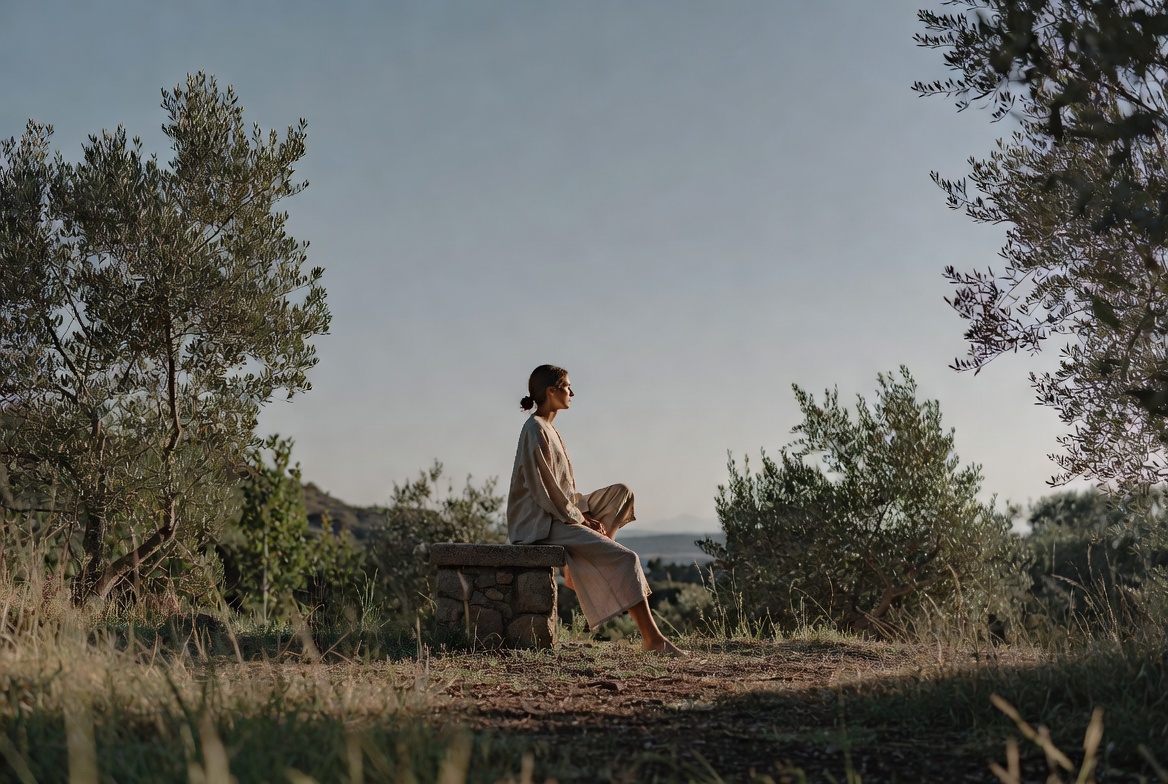
The strongest case for slow luxury is not a commercial one. It is psychological, and it has been piling up quietly in academic journals for more than twenty years.
In 2003, the Cornell psychologist Thomas Gilovich and his colleague Leaf Van Boven published work that has since anchored how social scientists think about money and happiness. Their conclusion, since replicated many times over, was disarmingly plain: once basic needs are covered, experiential purchases — trips, dinners, concerts — deliver more durable happiness than material ones. The reasons map onto slow luxury with uncanny neatness.
Consider, first, that contentment with things tends to decay: the novelty fades, and the new car settles into being merely the car. Contentment with experiences runs the other way — it tends to grow, polished by memory into something frequently warmer than the event itself was. Consider, second, that experiences shrug off the corrosive comparison that eats at ownership. A neighbor’s bigger television shrinks yours; a friend’s marvelous holiday does not really shrink yours, since experiences are far harder to line up and rank. People weigh them, the researchers found, far less competitively.
Then there is the waiting. Later research in the same tradition showed that people are measurably happier merely anticipating an experiential purchase than a material one — looking forward to a trip pleases in a way that looking forward to a product, shot through with impatience, does not. And experiences fold into who we are. We are, in a genuine sense, far more the sum of what we have done than of what we have bought. An experience gets absorbed into identity; a purchase mostly sits in the closet.
Hold those findings up against slow luxury and the fit is almost eerie. The unhurried trip maximizes precisely the variables the research favors. It draws anticipation out over a longer arc. It produces the immersive, self-shaping memories that appreciate rather than depreciate. And by easing the pace, it opens the mental room for an experience to land at all — to be had rather than merely ticked off. The frantic five-cities-in-seven-days circuit, by contrast, is a machine for turning costly experiences into the psychological likeness of material goods: gulped down, endlessly ranked, forgotten nearly as fast.
The reckoning with fast travel
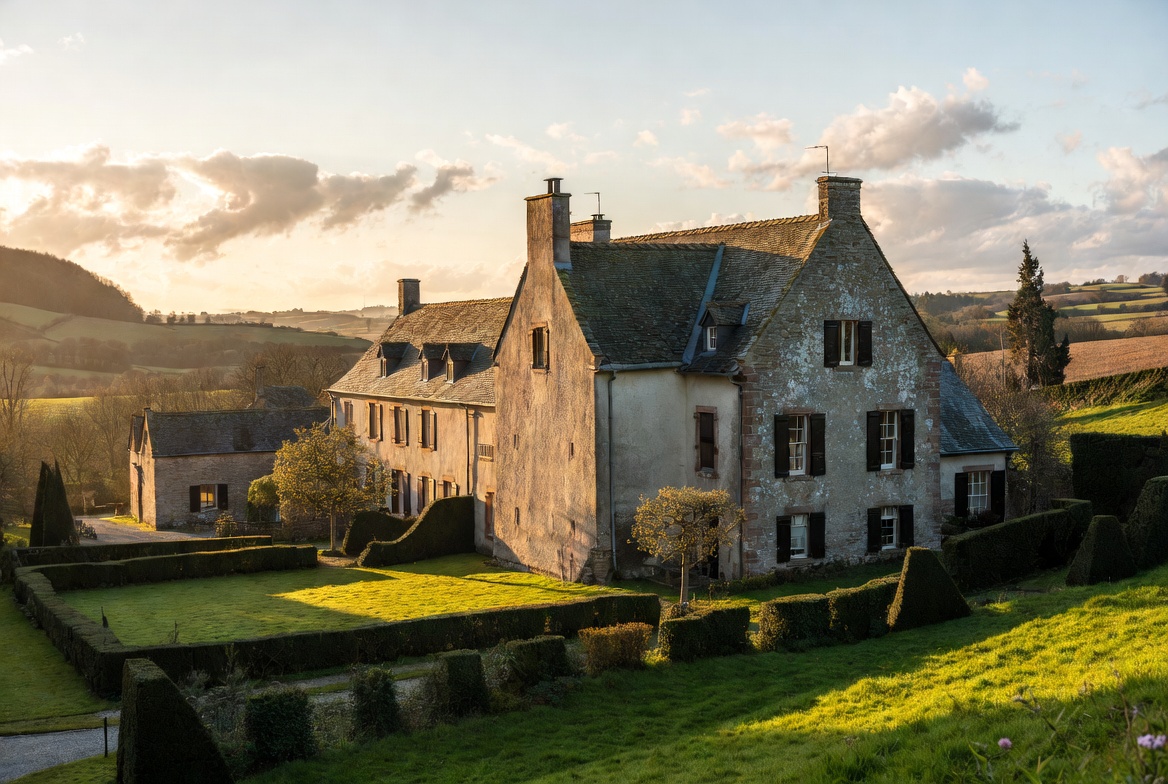
A harder, more ethical force is also driving the shift, and skipping it would be dishonest. Slow luxury is gaining ground at the precise moment that fast, high-volume tourism faces a reckoning.
Recent summers have planted “overtourism” firmly in the news cycle. In Barcelona, Venice, Amsterdam, Lisbon, and the Canary Islands, residents have marched again and again against the strain of visitor numbers on housing, infrastructure, water, and ordinary daily life. The imbalance is stark: by some counts, roughly 80 percent of the world’s tourists pour into just 10 percent of its destinations. Venice, home to about 55,000 permanent residents, can take on as many as 120,000 visitors on a peak day — a city outnumbered by its own guests. Municipalities are pushing back with whatever levers they have: day-tripper entry charges in Venice, licensing caps on short-term rentals in Barcelona, a hotel-building freeze in Amsterdam, tighter limits on cruise arrivals. “The destination is the product,” one European tourism official put it flatly. “If we destroy the city socially or environmentally, no one will come anymore.”
The climate math drives the point home. Tourism’s transport alone, by estimates from the UN’s tourism body and the International Transport Forum, accounts for around 5 percent of global emissions and roughly 22 percent of transport-related emissions — and one systematic review has cautioned that, left unchecked, tourism could swallow as much as 40 percent of the remaining carbon budget consistent with holding warming to 1.5°C. The heaviest emitters cluster, unsurprisingly, at the fast end of travel: the cruise ship that unloads thousands of day-trippers and, per passenger, can throw off several times the carbon of a transatlantic flight; the long-haul dash taken for a single weekend.
Slow luxury offers a modest reply to all of it, and it is worth staying honest about the reply’s ceiling. Staying put for longer, moving overland where you can, eating and spending close to the ground — these really do cut a trip’s carbon-per-day and steer tourist money toward the communities doing the hosting rather than the multinationals doing the extracting. Regenerative travel, sustainability’s more ambitious sibling, reaches further still, setting out to leave a place measurably better than it was found; surveys indicate that most travelers now say they would pay a premium for trips that visibly benefit their destinations. A week in a low-density region — the quiet inland Alentejo, say, rather than a heaving coastal capital — feeds a local food economy and small lodgings in a way no whirlwind tour ever could.
Honesty, though, means naming the strain. A €20,000 rail journey is no climate intervention, however unhurried. Even the slowest, most local trip on earth often opens with a flight. And “slow” can sour into an alibi for luxury — a way of feeling righteous about exclusivity, of recasting the plain fact of owning more time and money than other people as a moral achievement. The most serious practitioners understand this, and the better operators are doing real work: overland transfers, local sourcing, genuine investment in communities rather than the laminated greenwash of a “save the towels” notice. The worst are simply retailing the same old privilege in linen.
What it looks like on the ground

For all the philosophy, slow luxury comes down in the end to a set of choices — and those choices are getting easier to make.
Its most photogenic form is the return of the grand train. The Orient Express name, dark for decades, is back as a calculated wager on slowness: La Dolce Vita Orient Express began running sleeper journeys across Italy in 2025, its cabins dressed in the country’s mid-century glamour and its stated creed that “the journey becomes the destination.” In October 2026 it revives the most legendary route of all — a five-day, four-night run from Rome to Istanbul that echoes the 1883 original, with one-way fares opening around €20,000; a separate L’Orient Express, assembled from meticulously restored 1929 carriages, is set to follow. La Dolce Vita’s general manager called the appeal “slow cruising” — the pleasure of a passage whose point is not the arrival. Shorter Italian runs start closer to €3,500, but the logic holds at every scale: a train converts transit, the very part of travel we usually try to shrink, into the experience itself.
Quieter but weightier is the plain decision to stay in one place. Across the 2026 reporting, the signature behavior is the long single-base stay — a week or more in one village or neighborhood, inhabited rather than toured. The slow traveler’s aim has moved from seeing a place to feeling it: picking up a craft, becoming a regular at one café, soaking up a community’s daily rhythm instead of racing its landmarks. Hotels are answering with extended-stay rates and built-in local programming; remote work has smudged the old line between holiday and life, putting the month in a farmhouse within reach of people who once had only a hurried week. Climate nudges the same way, steering travelers toward cooler, calmer regions — the Alps, Scandinavia, the Scottish Highlands — that reward a slower, nature-led pace by their very nature.
A few European estates show what staying put looks like when someone commits to it. In Portugal’s Alentejo, below the medieval hill town of Monsaraz, São Lourenço do Barrocal is a roughly 2,000-acre working farm the Uva family has held for more than two hundred years. Nationalized after the 1974 Carnation Revolution and left to decay for decades, it was patiently brought back by eighth-generation owner José António Uva — alongside the Pritzker Prize–winning architect Eduardo Souto de Moura — into a hotel where old barns, stables, and even an olive press now serve as guest cottages, while the estate still presses its own oil and bottles its own wine. Visitors come to ride, to stargaze beneath some of Europe’s darkest skies, to wander among Neolithic megaliths, and above all to stay a while. The same instinct runs through Castello di Reschio, on the Umbria–Tuscany line: a roughly 1,500-hectare estate built around a near-thousand-year-old castle and more than fifty farmhouses that the Bolza family spent three decades restoring. The ruined cottages are now villas to rent or own, the castle a thirty-six-room hotel, the land a working vineyard with its own stables and an on-site furniture workshop. Neither is somewhere you pass through. Both are somewhere you settle into — where the point is never the room, but the rhythm.
The thread linking the sleeper train to the rented farmhouse is the one Petrini tugged in 1986: the conviction that quality lives in attention, and attention takes time. You can no more taste a region from a tour bus than you can taste a meal eaten standing up.
Why it matters
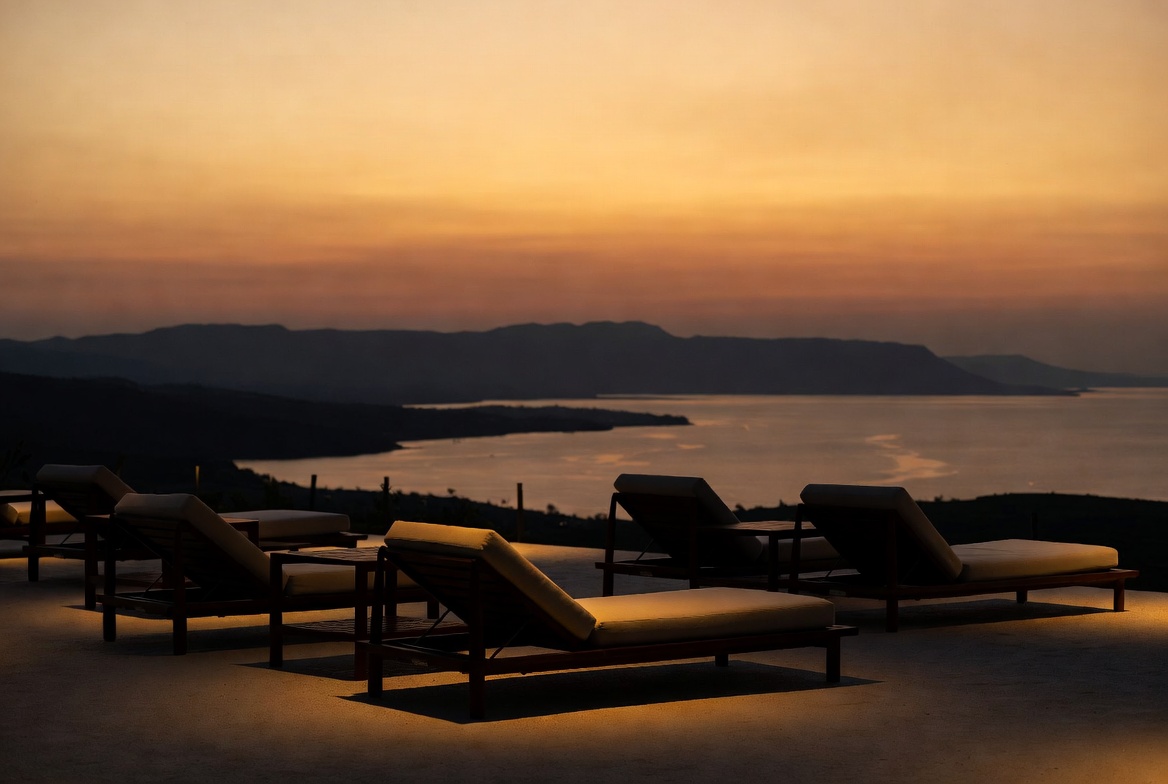
It would be tempting to shelve slow luxury under lifestyle — an agreeable preference of the comfortable, of no real weight to anyone else. That sells it short.
What is actually underway is a renegotiation of what the word luxury means, and the direction of that shift reaches well past the people who can afford a private villa. For most of the modern age, luxury stood for accumulation and display: the rarest object, the most exclusive address, the visible proof of having more. Slow luxury proposes something nearly heretical in a culture built around speed and acquisition — that the highest luxury is not having more but needing less; not seeing everything but truly seeing one thing; not the optimized itinerary but the afternoon with nothing planned at all. It treats time, attention, and presence as the scarce goods they have become, and it treats restraint as a form of wealth.
That reframing carries consequences. When the most aspirational travelers — the ones the rest of the field copies within a season or two — start signaling that depth beats breadth, that fewer-and-longer beats more-and-faster, the incentives that bred overtourism and its emissions begin, gradually, to bend. A travel culture that prizes staying put is, almost by accident, a gentler one: lighter on the places it adores, kinder to the communities it enters, more honest about the gap between consuming a destination and actually knowing it.
And there is the private payoff, the one the psychologists keep flagging. The frantic trip, for all it costs, tends to evaporate; the slow one tends to deepen, ripening in memory into something that truly enriches a life. At its best, slow luxury is not really about indulgence at all. It is a quiet argument about how a person ought to spend the one resource none of us can replenish — which was never money, and never will be. It is time. The travelers reaching for slowness have simply run the numbers and concluded that the most luxurious thing they can buy is the chance to be somewhere fully, for a while, with nowhere else they need to be.


Leave A Comment