
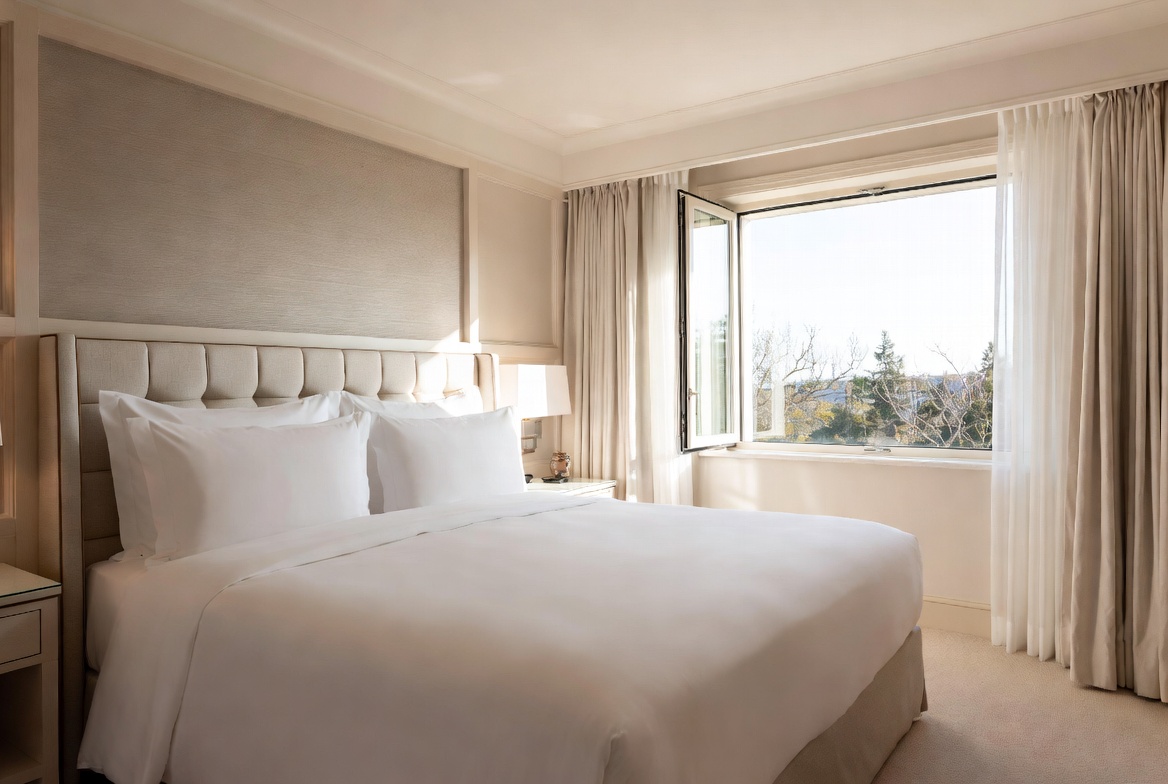
Somewhere in the last decade, a new kind of exhaustion crept into the way we travel, and for years the spa menu had no word for it. It is not jet lag, and it is not the honest tiredness that follows a hard week. It is the faint electrical buzz of never being unreachable — the phantom pocket vibration, the open-plan hum, the rooftop bar with a DJ nobody requested, the “experience” that turned out to be a line. In 2026, hospitality has finally named the antidote, and the name sounds like wordplay until it sinks in: hushpitality.
Hushpitality means building a stay around silence, stillness, and the intentional stripping-away of stimulation — treating calm not as a lucky side effect of somewhere remote but as a designed, deliberate amenity. It is the front-desk chapter of a far bigger cultural shift, one that started on runways and in prestige television and has now checked into the hotel. What follows traces where the word came from, the data that gives it weight, the science that explains its pull, the mechanics hotels use to manufacture quiet, and the awkward questions the whole idea raises about what “luxury” has come to mean.
Defining the Term
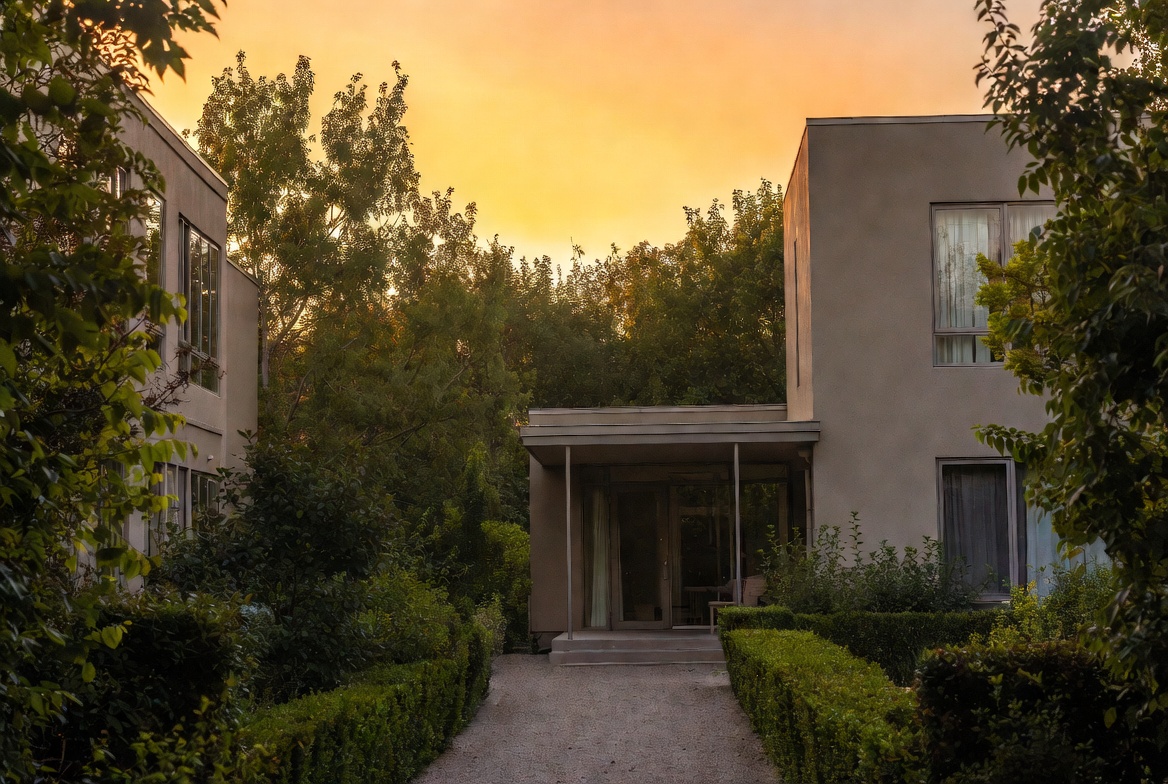
The word fuses “hush” and “hospitality,” and, as coinages tend to, it outran any single settled definition. Stripped down, hushpitality is a hospitality philosophy that offers silence as a service on purpose, rather than as an accident of distance from a city. That difference is the whole point. A cabin in the middle of nowhere is quiet because nothing surrounds it. A hushpitality property is quiet because someone chose to make it so, then trained and ran the operation to keep it that way.
That is the distinction industry watchers keep returning to: where an ordinary quiet hotel leans on remoteness, hushpitality sells calm as a designed feature, produced through architecture, service choreography, and house policy. Quiet stops being a fortunate accident and becomes the actual product. The surrounding language has expanded to fit — guests now book “quietcations,” trips arranged wholly around decompression, and swap notes on “silent retreats,” “digital detox” stays, and “sleep tourism.”
Credit for pushing the term into the mainstream usually goes to Hilton, whose 2026 Trends Report ranked hushpitality first among the movements it expects to define the year, with the platform Expedia and a run of boutique operators carrying it through 2025 and into 2026. The more revealing question, though, is not who coined it. It is why so many people grasped it instantly, with no explanation required.
From Stealth Wealth to Silent Stays: The Quiet Luxury Lineage
Hushpitality has a clear parent. It is the hospitality translation of “quiet luxury,” a consumer sensibility that firmed up into a real movement around 2023.
Quiet luxury — variously called stealth wealth, the old-money look, or silent luxury — is understated, refined consumption that broadcasts taste without raising its voice. The signatures are well known now: no visible logos, subdued palettes, natural fibres like cashmere, silk, wool, and linen, timeless cuts, and a bias toward craftsmanship and durability over each new season’s noise. Its cultural triggers were oddly precise. The final season of HBO’s Succession, dressed in deliberately anonymous wealth, and Gwyneth Paltrow’s closely watched 2023 ski-collision trial — where her obviously costly, label-free courtroom looks turned into a meme — sent interest through the roof. By one much-quoted figure, Google searches for “quiet luxury” jumped more than 600% inside a single year.
It would be easy to write this off as fashion doing what fashion does, but the forces underneath are economic and psychological. Analysts at Bain & Company noted that wealthy buyers were placing longevity and craftsmanship ahead of showy display. Against a backdrop of economic wobble, anxiety about inequality, and social-media burnout, loud spending started to look insecure, while restraint started to look self-possessed. The look also has deep roots. It traces to the rise of the European and American capitalist class in the late 18th and early 19th centuries, when the newly powerful adopted sober, plain dress and interiors to set themselves apart from the peacockery of the old courts — the pivot menswear historians label the “Great Male Renunciation.”
There is a fine but crucial nuance that casual use tends to flatten. Stealth wealth implies concealing money; quiet luxury implies quietly signalling it. Invisibility was never the aim — the aim was a more exclusive visibility, readable only by those already fluent in the codes. Hushpitality borrows precisely that logic and maps it onto space, time, and sound. The flex is no longer a marble atrium with a cascading fountain. It is a room where nothing intrudes, a hallway where you cross paths with no one, a morning free of alerts and obligations. Where quiet luxury murmurs through fabric, hushpitality murmurs through the absence of everything that ordinarily fights for your attention.
The Data Behind the Trend
A new word is only marketing until the figures arrive. With hushpitality, they have.
The most-quoted evidence comes from Hilton’s 2026 Trends Report, subtitled The Whycation: Travel’s New Starting Point. Its foundation is sizeable: a survey of more than 14,000 travelers across 14 countries run with Ipsos over June 2025, backed by input from over 5,000 Hilton employees and 1,000 loyalty members. The core argument is that travelers in 2026 begin with why they are going rather than where — and the most common answer to “why” is rest.
By that research, the leading reason to travel for leisure in 2026 is “to rest and recharge,” named by 56% of respondents. Time in nature comes next at 37%, and better mental health at 36%. For a business that spent most of a decade selling spectacle — the more bucket-list stamps, the better — that is a real reversal. The point of the trip is no longer to accumulate. It is to subtract.
The business-travel numbers say even more, because they describe people who never intended to unwind. Better than a quarter of business travelers — 27% — deliberately protect alone time on work trips to recover. Around 30% choose a private late-night meal or snack after group functions instead of more mingling. Nearly half — 49% — would sooner order room service than eat with their team. And a notable 64% say the best part of a work trip is simply catching up on sleep in a good hotel bed. Among parents who travel for work, 81% agree that time alone, away from the demands of parenting, is an underrated perk of the trip.
Solitude is being written into family travel, too. Nearly half of travelers — 48% — now tack solo days onto the front or back of family vacations to bank recovery time, and more than half — 54% — admit they would take a work trip partly to get a break from a partner or family. Hilton’s report states the headline figure plainly: roughly 28% of travelers intend to seek out more quiet time alone, even on group trips.
The hunger for structured silence is strong enough to have spawned its own micro-market. Research cited alongside the Hilton data found that 57% of U.S. travelers would be interested in a quiet or silent retreat, including 53% specifically drawn to a “reading retreat.” That last one is no gimmick: literary tourism brought in roughly $2.4 billion in a recent year and is forecast to reach about $3.3 billion by the mid-2030s. The picture of a holiday is shifting from a crammed itinerary to a single armchair, a window, and a book nobody will interrupt.
Why Now: The Science of a Noisy World

Hushpitality lands hard because it answers a problem with measurable physical costs. Quiet is not just pleasant. Chronic noise is a documented health hazard, and modern life is soaked in it.
The European Environment Agency’s 2025 review of noise across the continent makes for grim reading. More than one in five Europeans — over 20% of the population — face transport noise above the EU’s own limits, and against the tighter thresholds the World Health Organization recommends, that share rises past 30%, close to one in three people. Road traffic by itself subjects an estimated 92 million people to harmful day-evening-night levels. In cities, the proportions run higher still.
None of this is a mere nuisance. The agency estimates that long-term transport-noise exposure contributes to roughly 66,000 premature deaths in Europe each year, along with about 50,000 new cardiovascular cases and 22,000 cases of type 2 diabetes. Nearly 17 million people live with sustained, high annoyance, and around 4.6 million endure serious sleep disruption. The WHO has separately reckoned that hundreds of thousands of healthy life-years vanish annually in the region to noise-linked illness, disability, and early death. Children carry an outsized share: over half a million across Europe are thought to have reading difficulties, and tens of thousands behavioral problems, tied to transport noise.
The biology is well mapped. Noise works as a chronic stressor, firing the sympathetic nervous system and the body’s hypothalamic-pituitary-adrenal axis. That chain releases stress hormones, pushes up blood pressure, and quickens the heart — even in sleep, when the body should be repairing itself. The harm builds silently, year over year. When researchers call silence a luxury, this is the literal meaning: real quiet has grown scarce, and its absence is making people ill.
Add the mental load of constant connection — the pings, the group threads, the assumption of instant reply — and you have a population whose nervous systems rarely get to power down. Hushpitality is, in effect, a commercial answer to a public-health condition. It sells the one thing daily life has stopped handing out for free.
The Money: A Wellness Economy Worth Trillions

Underneath hushpitality sits one of the world’s largest and fastest-growing consumer markets. The Global Wellness Institute put the global wellness economy at a record $6.3 trillion in 2023, up from $5.8 trillion in 2022 and $4.6 trillion in 2020, and projected it to near $9 trillion by 2028. Wellness tourism in particular is expected to expand by more than 10% a year across that stretch.
What matters is that wellness travel pays. Most of it is what the institute calls “secondary” wellness tourism — travelers picking healthy options on a trip taken for other reasons — which made up about 83% of wellness tourism trips and spending in 2023. But those who travel chiefly for wellness spend far more: domestic wellness tourists in one recent year spent roughly 175% more per trip than the average domestic traveler. The infrastructure has grown to meet the appetite. The world’s spa count hit about 201,861 in 2024, up roughly 15% from 175,482 in 2019.
Sleep, especially, has become a category of its own. “Sleep tourism” — trips chosen expressly to sleep better — has grown into a standalone reason to travel, complete with sleep-science programming, dedicated therapists, and high-tech bedrooms. Hilton’s own Sleep Retreats, launched at Grand Wailea, A Waldorf Astoria Resort on Maui with a sleep specialist, pair sleep science, spa therapies, and one-on-one sleep planning, and the resort’s wellness rooms come stocked with recovery tools, meditation goggles, and air purifiers. The luxury group Six Senses has pushed even further, building an entire Sleep With Six Senses program around wearable sleep trackers, blackout rooms, and yoga nidra across its resorts. Hushpitality serves, in many ways, as the umbrella brand for this scattered set of offerings — silent retreats, digital detoxes, sleep programs, reading holidays, low-density resorts — pulled together under one resonant idea: the product is peace.
How Hotels Actually Build Silence
The compelling question here is practical. How do you manufacture quiet, and stop it from leaking back in? Properties committing to hushpitality tend to pull several levers at once.
Acoustic architecture. This is the base layer. Soundproofed walls and windows, layered soft furnishings, sound-absorbing materials, careful distance between rooms and elevators, ice machines, and mechanical plant, and landscaping shaped to blunt outside noise. The goal is a building where unwanted sound has nowhere to go.
Operational silence. Quiet that survives other guests takes policy, not just construction. That can mean adults-only zones, designated silent floors or “quiet hours,” curbs on amplified music, caps on group bookings in certain wings, and front-of-house training built on discretion — staff who anticipate rather than announce. The ideal is a paradox: the best service is the service you hardly register.
Low density. Fewer rooms, more space between them, and firm limits on occupancy. This is where boutique inns and small independents hold a natural edge. Many already live the formula — small room counts, intimate design, personal service, and seasonal calm, especially in winter and the shoulder months — without ever labeling it. For them, hushpitality is less a renovation than a rebrand: naming, then marketing, what they already did.
Sensory restraint. Muted palettes, soft indirect light, natural materials, uncluttered rooms, and a deliberate turning-down of visual noise as well as audible noise. The aesthetic maps almost exactly onto quiet luxury’s no-logo minimalism — the room as a place to exhale rather than a stage to perform on.
Digital boundaries. Some properties go further and treat connectivity itself as the intruder, offering phone lockboxes, deliberately thin Wi-Fi, “tech-free” rooms, or programming built around switching off. The purest version of this is a property like Eremito, a restored 13th-century hermitage in the Umbrian wilderness where dinners happen in candlelit silence, there are no televisions or in-room Wi-Fi, and the whole stay is organized around digital detox and stillness rather than amenities. Paradoxically, other operators lean on technology — AI-assisted planning, frictionless check-in — precisely to clear away the logistical noise of travel: the delays, the queues, the fragmented arrangements that fray a guest’s nerves long before the room.
The same logic now stretches well past leisure. In the corporate and events world, hushpitality has been adopted as a productivity tool. At vast trade fairs and congresses — Mobile World Congress in Barcelona, MIPIM and ILTM in Cannes — executives face days of decision fatigue and social overload. Operators serving that crowd increasingly compete on their ability to secure calm, low-density rooms within reach of the venue: tranquility, pitched openly as protection for a delegate’s scarcest resource, their focus.
Tensions, Criticisms, and the Risk of Hype
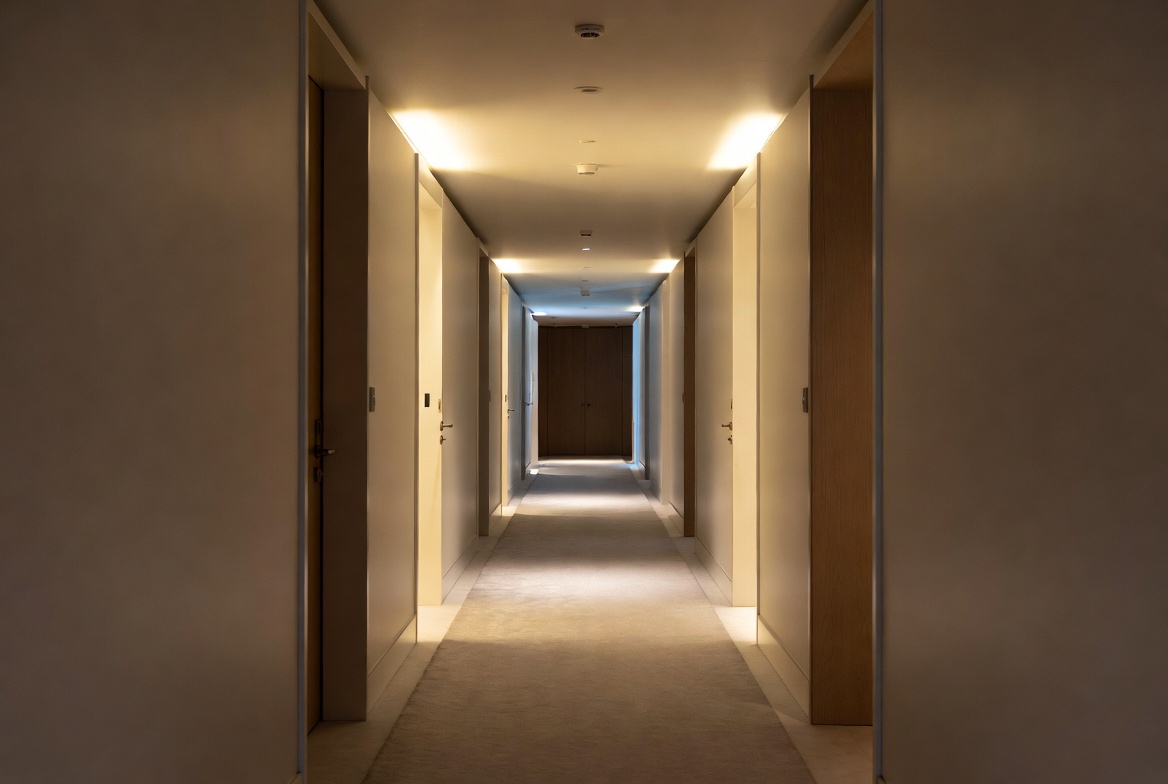
A trend this sellable invites plenty of skepticism, and a few tensions deserve to be named straight.
The first is the commodification of something that arguably ought to be a right. There is an uncomfortable irony in a world where noise pollution kills tens of thousands of people a year, disproportionately in dense cities and lower-income neighborhoods beside highways and rail lines — and where the cure, real quiet, is packaged and sold back to those who can afford a resort. Silence as a premium amenity is, by definition, silence most people cannot buy. Hushpitality fixes the problem for the few while leaving its structural cause in place.
The second is the ever-present risk of “wellness washing.” Because so much of the concept is framing, almost any property can bolt the language of stillness onto its marketing without changing a thing. A standard hotel that stamps “sanctuary” across its website and dims the lobby has not become a hushpitality property; it has rebranded. Sharp travelers — and the press — will in time tell designed silence apart from a soft-focus photo of an empty bed.
The third is whether hushpitality lasts or fades with the season. Quiet luxury in fashion was written off as a fad again and again, yet it endured and evolved instead of collapsing. Hushpitality has a firmer claim to staying power, because it rests on durable forces — chronic digital overload, an aging, wellness-minded affluent population, and the hard epidemiology of noise — rather than a single television show. The underlying need is not leaving. The label might.
Finally, a quieter philosophical question. If reaching a single moment of stillness takes hundreds of miles and a premium fee, what does that say about the lives we have built at home? Hushpitality is as much a symptom as a solution. Its commercial success also measures how thoroughly modern life has squeezed out rest.
What Comes Next
A few directions look likely as the idea matures through 2026 and beyond.
Expect it to spread from destination resorts into everyday hospitality — city hotels marketing “quiet floors” to business travelers, airport lounges selling stillness instead of buffets, urban properties competing on soundproofing the way they once competed on thread count. Expect, too, a layer of measurement and accreditation: much as buildings earn sustainability ratings, properties may start to certify and advertise acoustic performance, giving travelers a way to check the promise rather than trust it blind.
The technology paradox will sharpen. The most sophisticated operators will use automation and AI to strip out friction — the check-ins, the logistics, the decisions — while offering refuge from the very devices that automation runs on. Done well, the tech disappears and only the calm is left. Done badly, it becomes one more screen between the guest and the silence they came for.
The base of guests will widen, too. What began as a high-net-worth look is already drifting toward the mainstream of affluent and aspiring travelers, much as quiet luxury did in fashion. Boutique inns, eco-lodges, monastery stays, and rural retreats can all stake a credible claim, which means the market will split into tiers — from genuinely engineered, acoustically certified luxury at the top to the plain, honest quiet of a small place in the countryside.
Conclusion: The New Status Symbol Is Nothing at All
Hushpitality flips what hospitality has spent decades selling. For a long time, luxury meant more — more amenities, more spectacle, more to photograph and post. The new luxury shows itself through absence: no noise, no notifications, no crowd, no itinerary, no one steering you toward the next thing to buy. The status symbol is the empty calendar and the silent room.
That this now reads as aspirational says something about the moment. We have built a world loud enough to shorten lives, busy enough to make rest feel like an indulgence, and connected enough that disconnection has to be paid for. Hushpitality is the industry’s reply — part real remedy, part shrewd rebrand, part quiet verdict on everyday life. Whether the word outlives the year matters less than the need under it, which is going nowhere. In an age of overstimulation, the rarest and most coveted thing on the menu is, increasingly, nothing at all



Leave A Comment