

The most interesting travelers of 2026 have become difficult to find. They are not where the crowds are. They skipped the rooftop bar that trended last August, avoided the beach club with the four-figure minimum spend, and walked past the fountain ringed with tripods. Instead they went somewhere with no queue and no hashtag: a village high in the mountains, a bend in a wine-country river, the far end of a silent fjord. And they are keeping the address to themselves.
This is the shift redefining European luxury. For years, a destination doubled as a stage, and the photograph was the whole point. That logic has quietly collapsed. For the travelers who set the pace, the real prize is now the thing money struggles to buy in a crowded world: space, quiet, and the sense of standing somewhere that hasn’t been sanded down by mass tourism. Luxury has moved from loud to deliberate. The governing question is no longer where you’ll be seen, but where you can genuinely switch off.
The forces behind the change are easy to name. Europe’s marquee cities and beauty spots have grown crowded enough to introduce entry fees, timed tickets, and visitor caps. Mediterranean summers now arrive with punishing heat, nudging travelers toward cooler air and gentler months in what the industry calls the “coolcation.” And there is a real weariness with places that look like paradise online and feel like a transit hall in person. Resisting the obvious pays off: better value, warmer welcomes, and the increasingly scarce pleasure of a landscape that belongs, for a while, to you alone.
This guide tilts on purpose toward mountains and water, because that is where the year’s quiet luxury feels most complete. One practical note before booking: travelers from outside the EU, including those from the US, UK, and Canada, should check the status of the European Travel Information and Authorisation System (ETIAS), which is being rolled out across 2026, and sort out any required authorization well ahead of departure.
These are the best quiet luxury destinations in Europe for 2026.
1. The Serra de Tramuntana, Mallorca
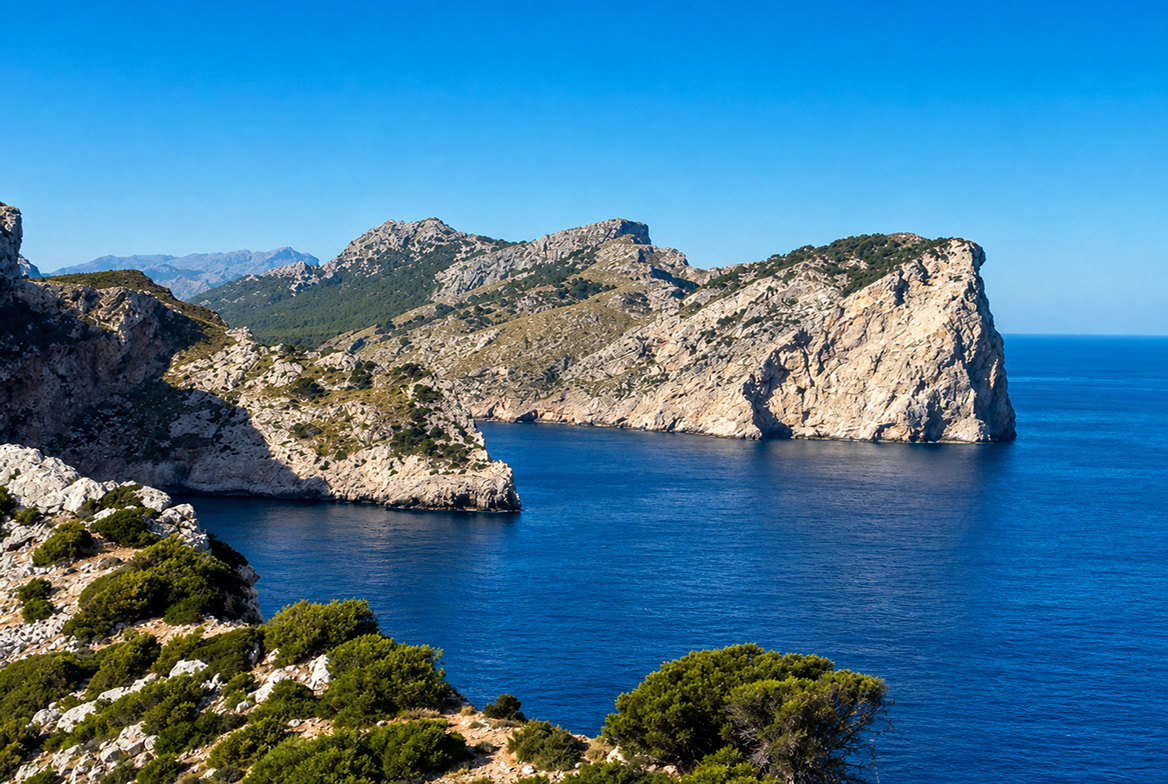
Mallorca carries a reputation that the best part of the island does nothing to deserve. While the south trades in package tourism and Palma’s bay swells with cruise passengers, the northwest is another country entirely: the Serra de Tramuntana, a UNESCO World Heritage cultural landscape where limestone ridges plunge toward the sea and terraced groves of olive and citrus climb the slopes above old stone villages. This is the Mallorca of people who came for the light and the landscape, not the clubs.
Its unofficial capital is Deià, a village of honey-toned houses stacked on a hillside that has drawn painters, writers, and musicians for generations. The poet Robert Graves settled here, and the creative charge he left behind still hums through the place. Days move slowly. Lunch drifts into late afternoon, and the hardest choice you’ll face is whether to walk down to the pebbled cove at Cala Deià or stay put with a book.
The address that defines a stay here is Belmond La Residencia, wrapped in gardens of olive and citrus at the edge of the village, sheltered by green mountains and looking toward the water. Built around twin manor houses dating to the sixteenth and seventeenth centuries, it holds around 67 rooms and suites finished in whitewashed walls, beamed ceilings, and terracotta floors — quietly confident rather than showy, in keeping with the island’s own understatement. Local artwork fills the interiors, reinforced by the hotel’s own artist in residence, and the dining runs from the refined El Olivo, set inside a former olive press, to a relaxed terrace of Mallorcan tapas. A complimentary shuttle carries guests down to Cala Deià for sea and sun.
What lifts a stay above a handsome hotel is how naturally it opens onto the land around it. Guests borrow bicycles for the scenic run through Valldemossa, Bunyola, and the citrus town of Sóller; hike a section of the GR221, the long-distance “Dry Stone Route” that threads the whole range past terraces and shepherds’ huts; join a complimentary boat trip along the protected coast; or, in a charming island custom, walk one of the hotel’s donkeys to a picnic among the olive trees. Down at Cala Deià, the rustic cliffside shack Ca’s Patró March — clinging to the rocks above the water, long treasured by those in the know — grills the day’s fish and pours a cold local white with your feet nearly in the sea. The villages nearby reward slow days: Valldemossa, with the Carthusian monastery where Chopin once wintered; Sóller, reached by a wooden train that has rattled through the mountains since 1912 and linked to its port by an open-sided heritage tram; and Deià itself, where Graves’ old home, Ca n’Alluny, is now a museum keeping the village’s literary spirit alive. Save it all for outside peak August, when even the Tramuntana fills up.
Best for: Couples and families who want Mediterranean island life with a cultural soul — mountain walks, sea swims, long lunches — and none of the Balearic party circuit. Palma airport is roughly 40 minutes away by car.
2. The Cairngorms and Royal Deeside, Scotland
For travelers who measure luxury in wild weather, big skies, and a single malt beside an open fire, the Scottish Highlands have become one of Europe’s most quietly compelling escapes. As the south of the continent bakes, Scotland offers the reverse: long summer daylight, heather-covered hills, salmon rivers, and country so empty you can drive an hour and meet more red deer than people. It is the coolcation at its purest, laid over a century and a half of country-house hospitality that Queen Victoria helped set in motion when she lost her heart to the region and built Balmoral.
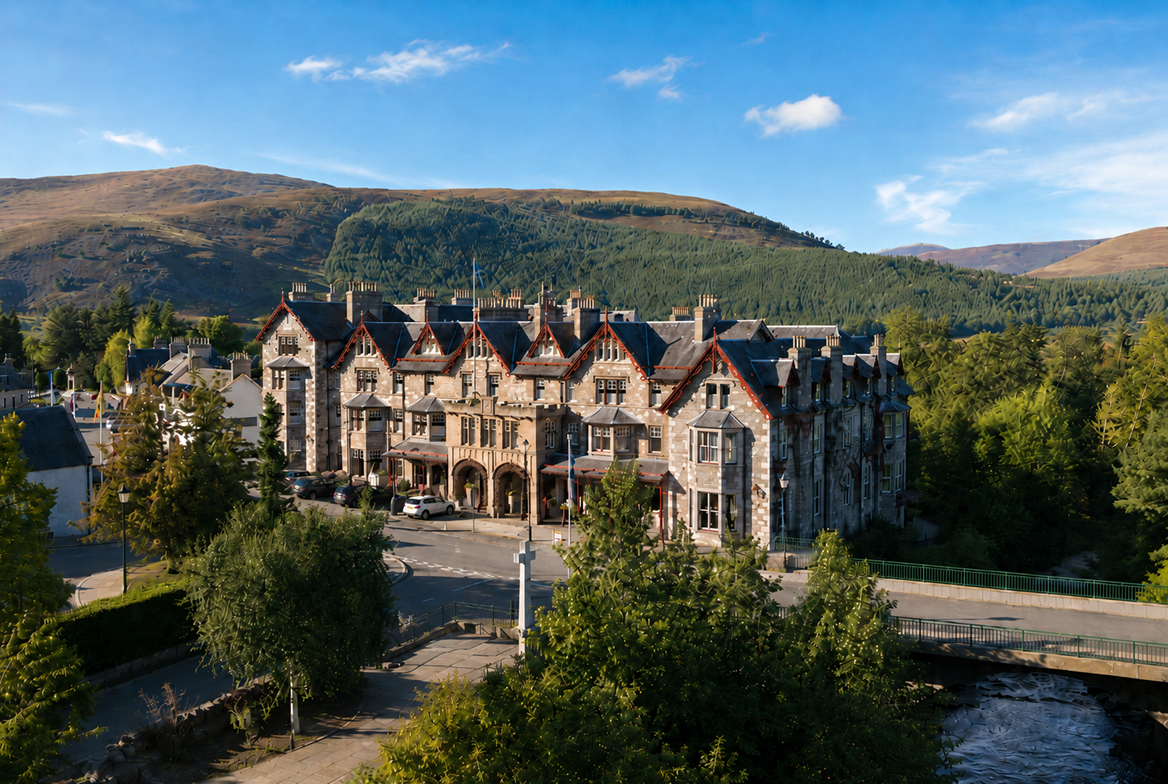
The base of choice is The Fife Arms in Braemar, deep inside the Cairngorms National Park and only a few miles from Balmoral. A Victorian coaching inn reborn as a five-star hotel under the gallerists behind Hauser & Wirth, it is unlike anything else in the Highlands. Each of its roughly 47 rooms and suites is designed individually, dedicated to a historical figure or a Highland scene, while the public rooms function as a serious art collection — an original Picasso hangs among pieces that range from antique taxidermy to new commissions. A holder of Two Michelin Keys, the hotel embraces maximalism, wit, and depth rather than restraint, yet never loses its Highland footing: the Clunie Dining Room turns out wood-fired contemporary British cooking built on local game and seafood, and The Flying Stag, the hotel’s own pub, draws locals with live music and pours from a lineup of more than 180 whiskies. A boot room and other practical touches let muddy hiking kit and high design share the same building without complaint.
The doing is the point here. Guests set off with the hotel’s ghillie to explore castles, distilleries, and rivers; fish, walk, or stalk across surrounding estates; play golf, sometimes on Balmoral’s own course; or take up foraging and photography. The wider Cairngorms are among Britain’s last great tracts of wildlife country — home to golden eagles, ospreys, red squirrels, and the country’s only free-ranging reindeer herd, which drifts across the high plateau and can be visited on foot. Because the park holds some of the darkest skies in the UK, a clear night lays out a field of stars most visitors never see at home. Closer to base, Royal Lochnagar distillery is at hand for a tasting, Braemar Castle is a short walk, the Games fill the village each September, and back at the hotel you can thaw out in the spa or work through a dram or two in the whisky bar before dinner.
The broader Highlands answer the same instinct for the remote and the grand. The mountains and lochs around Glencoe and Torridon are unmatched for drama; classic Highland luxury endures at properties such as Inverlochy Castle and The Torridon; and the Isle of Skye adds rugged beauty and Gaelic heritage. For total seclusion, several Scottish castles — Aldourie, on the shores of Loch Ness, among them — can be taken for exclusive use. The prime window runs May to September for the long days, with October and November bringing autumn color and whisky season.
Best for: Travelers pulled toward wild landscapes, field sports, whisky, and characterful design — the kind who would rather lace up boots than chase a tan.
3. The Julian Alps and the Soča Valley, Slovenia
Slovenia is the quiet-luxury traveler’s worst-kept secret: a compact country where the Alps, the Mediterranean, and the Pannonian plain converge, folding an improbable amount of dramatic scenery into a small, sustainable, uncrowded package. In 2026 it ranks among Europe’s most exciting nature-led destinations, and it still manages to feel genuinely off the main circuit — which is exactly the draw.
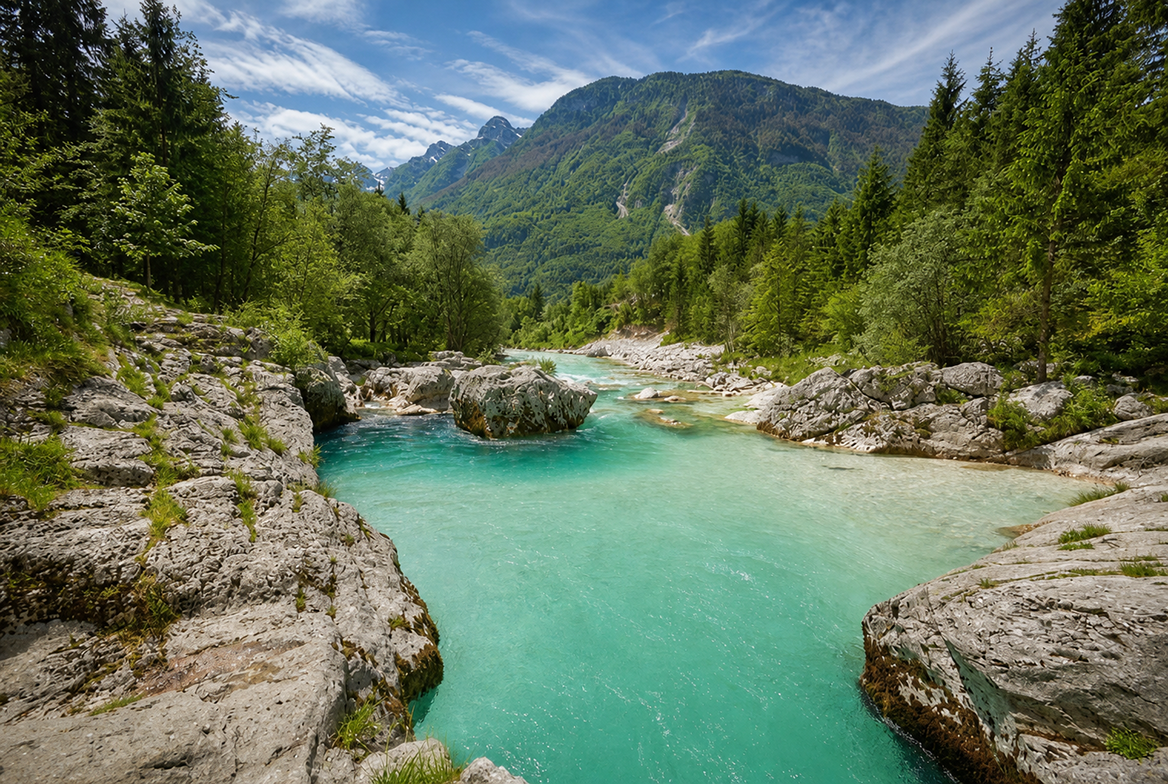
The heart of alpine Slovenia is the Soča Valley, cut by the luminous, almost unreal turquoise of the Soča River as it runs through gorges beneath the Julian Alps and Triglav National Park. There is white-water rafting, kayaking, and canyoning for the active, and slow riverside walks and long alpine views for everyone else. The valley also holds a haunting human history: a century ago it was the front line of the First World War’s brutal Isonzo campaign, and today the Walk of Peace links open-air trenches, fortifications, and the moving museum at Kobarid — the battle Hemingway drew on for A Farewell to Arms. Nearby, the fairytale tableau of Lake Bled — its clifftop medieval castle, its island church reached by traditional pletna boats, where ringing the bell is said to grant a wish — anchors the region; don’t leave without a slice of kremna rezina, the lake’s famous custard-and-cream cake. Quieter Lake Bohinj, Slovenia’s largest natural lake, delivers the same beauty with a fraction of the visitors, the Savica waterfall and a cable car up Mount Vogel waiting just beyond its shores.
The places to stay have grown into the landscape. In the tiny mountaineering village of Zgornje Jezersko, pressed against the Austrian border, Vila Planinka is a five-star boutique hotel built on a pointed idea: it puts its natural surroundings ahead of expensive materials and gadgetry, each room reflecting the world outside, with an award-winning restaurant and a focus on disconnection. On the shore of Lake Bohinj, the eco-certified Hotel Bohinj pairs mountain-and-lake views with sustainable design — recycled materials, a backlit headboard cut in the silhouette of Triglav, an outdoor pool facing the water. And in Kranjska Gora, near the Italian and Austrian borders, the design-driven Boutique Hotel Milka houses Restaurant Milka, whose two Michelin stars draw on Slovenian, Italian, and Austrian traditions and ingredients gathered from the shores of nearby Lake Jasna.
The valley’s defining experience, though, is a meal. Just outside Kobarid, in a pink-walled country guesthouse whose history reaches back to 1861, Hiša Franko is the restaurant that put Slovenian cooking on the world map. Self-taught chef Ana Roš — named the World’s Best Female Chef in 2017 and later the subject of a Chef’s Table episode — earned the country’s first three Michelin stars here in 2023, along with a green star for sustainability. The cooking is a genuine dialogue with the surrounding wilderness: trout, deer, goat, forest fruits, and foraged plants sourced from a tight-knit community of shepherds, cheesemakers, hunters, and fishermen, served alongside an underground cheese cellar and an organic wine list. Climb to the restaurant’s Kolovrat terrace and, on a clear day, you can see all the way to the golden shimmer of the Adriatic. The drive through the wild core of the Soča Valley is part of the pleasure — and, like a table here, it’s worth booking months ahead.
Slovenia suits the slow-travel mindset. A self-drive loop — starting and ending in the walkable, river-threaded capital of Ljubljana — links Bled, Bohinj, the Soča Valley, and the dramatic Vršič Pass, which switchbacks through 50 numbered hairpin bends to over 1,600 meters; partway up stands the poignant little wooden Russian Chapel, raised by First World War prisoners in memory of those killed in an avalanche while building the very road you’re driving. The country’s deep commitment to green tourism, from ecolabel-certified hotels to protected wilderness, makes it a natural fit for travelers who want their luxury to sit easily with their conscience. Autumn is especially lovely, though it is also the wettest season, so pack layers.
Best for: Active and nature-focused travelers, design lovers, and anyone chasing alpine grandeur and serious food without alpine crowds or alpine prices.
4. The Douro Valley, Portugal
Portugal has become one of Europe’s great luxury stories, but the smart move for 2026 runs inland and north, away from the Lisbon and Algarve crowds, to the terraced hillsides of the Douro Valley. This is the world’s oldest demarcated wine region and a UNESCO World Heritage cultural landscape — a sculpted amphitheater of vineyards stepping down in stone-walled terraces to the slow green ribbon of the Douro River. It is a place built for the unhurried pleasures of wine, food, and view, and it has the wellness-led hospitality to carry them.
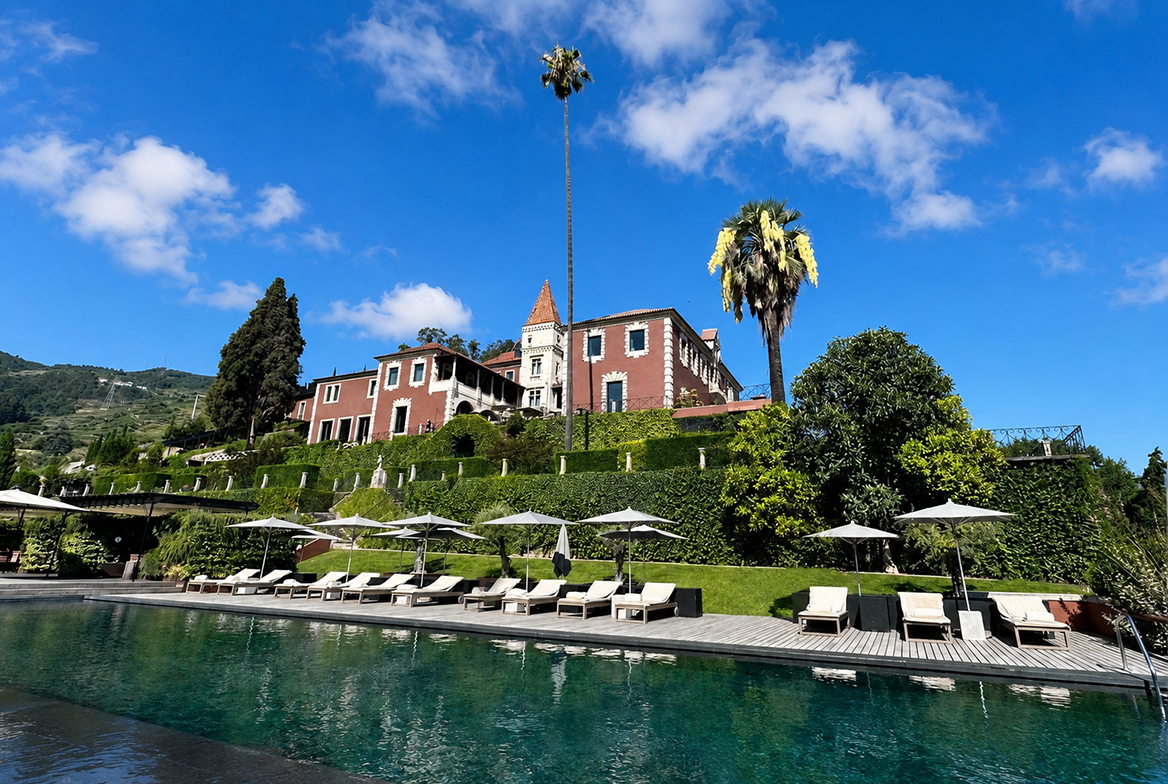
The flagship is Six Senses Douro Valley, set high on a hillside in a restored nineteenth-century manor house outside Lamego, about a 90-minute drive from Porto. The estate covers roughly 19 acres (8 hectares) and holds around 71 accommodations, from rooms and suites in the original quinta to private villas with pools scattered through the grounds. The interiors wed the romance of the old manor to contemporary, earth-toned Six Senses style, and the views — vine-covered hills falling toward the river — follow you from the infinity pool to the dinner table. Wellness runs through everything, anchored by an expansive spa of some 2,200 square meters, plus yoga, nature trails, and forest walks. So does wine: an interactive Wine Library lets guests pour their own small-format bottles from across the valley under the eye of local winemakers and the resort’s sommeliers, while the Vale de Abraão restaurant builds seasonal menus around organic produce from the estate’s own gardens. In season, guests can join the harvest and the age-old ritual of foot-treading the grapes.
The Douro is wine country before it is anything else, and the region invites exploration well beyond a single hotel. Family-run quintas open their cellars for tastings; lazy river cruises and traditional flat-bottomed rabelo boats — the vessels that once carried port casks downriver — trace the valley’s curves; and one of the world’s most scenic train rides, the Linha do Douro, hugs the water past terrace after terrace on its way upstream. Further east, the Vale do Côa hides one of Europe’s real surprises: an open-air gallery of Paleolithic rock engravings, tens of thousands of years old and protected by UNESCO. The wider Portuguese luxury scene supplies complementary stays too, from The Yeatman in Porto — perched above the port lodges of Vila Nova de Gaia — to Quinta da Romaneira deeper in the valley. UNESCO scenery, world-class fortified and table wines, wellness-forward hotels, and the absence of mass tourism together make the Douro one of the most complete quiet-luxury propositions in southern Europe. The cooler shoulder months around the autumn harvest are arguably the most atmospheric time to come.
Best for: Wine-loving couples, wellness travelers, and anyone marking a milestone who wants spa, river, and vineyard woven into one serene base. A rental car or hotel transfers are essential given the rural setting.
5. The Sunnmøre Fjords, Norway
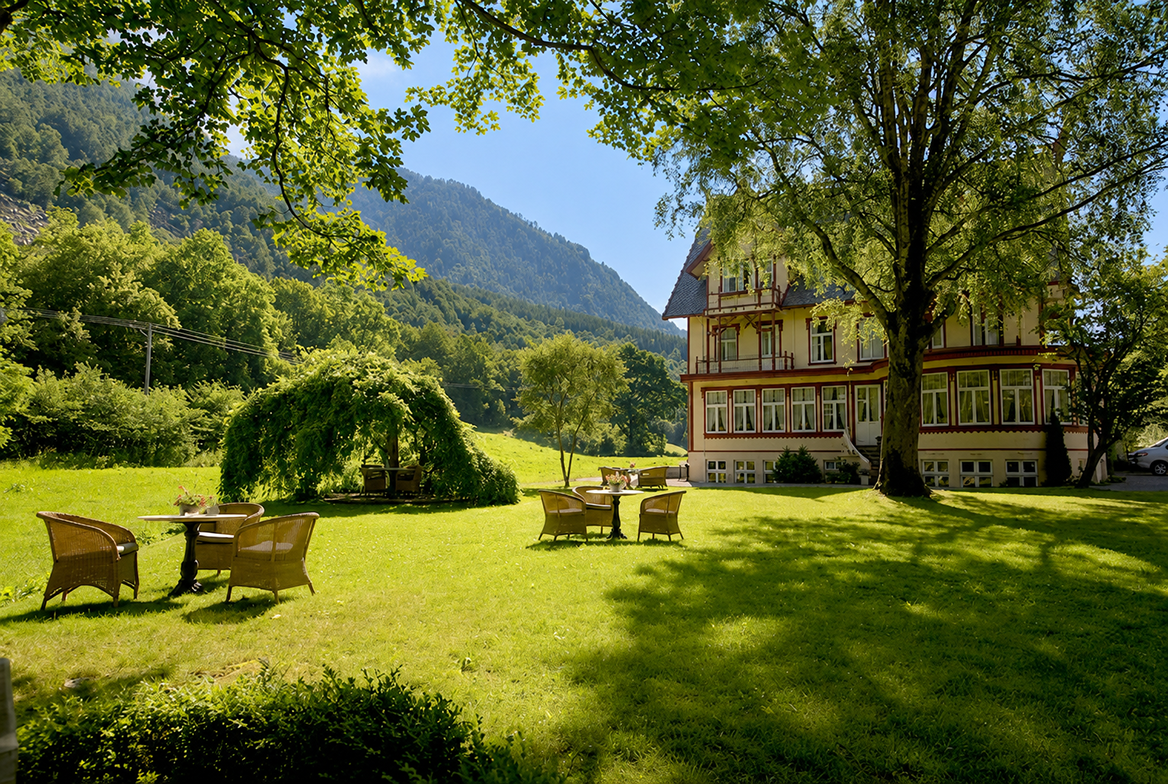
If the deepest form of quiet luxury is the feeling of standing very small before something very large, few places on earth deliver like the western fjords of Norway — and few stretches of that coast are as quietly grand as the Sunnmøre region around Ålesund. Glassy fjords run deep between steep, snow-streaked peaks, waterfalls drop straight off the cliffs, and the light shifts the water from deep blue to moody silver as the weather turns. It is the coolcation carried to its sublime conclusion, rewarding precisely because it asks you to slow down and pay attention.
The most distinctive place to stay is Hotel Union Øye, tucked at the head of the Hjørundfjord beneath the jagged Sunnmøre Alps. Welcoming adventurers and romantics since 1891, this nineteenth-century timber hideaway holds an atmosphere of quiet grandeur few hotels anywhere can match — antique four-poster beds, rooms colored by the landscape outside, firelit lounges, and evenings of live piano in the salon. (There is even a working “ring for champagne” bell in one of the grander suites.) A holder of a Michelin Key, it leans into old-school romance while the menu shifts with the fjord and the season. Its sibling, Storfjord Hotel, plays a different note: a handcrafted log hotel built in the traditional lafta method on a hillside above the Storfjord, where every suite has a private fjord-view balcony and the mood turns warm, woody, and contemplative. Both belong to the 62°Nord collection, which specializes in bespoke Nordic adventures and connects its boutique hotels with a private fleet of boats, vintage cars, and helicopters.
The reason to base yourself here is the landscape, taken at a human pace. Days go to hiking the surrounding mountains — the pyramid-shaped peak of Slogen, rising straight from the Hjørundfjord, has lured climbers to Øye since the Victorian age — kayaking the fjords, joining a sea safari, or simply being driven through one of Norway’s most beautiful valleys to a long, local-sourced lunch. The guest book at Union Øye reads like a roll call from another era: European royalty, polar explorers, and celebrated writers and composers all made the pilgrimage. The iconic Geirangerfjord, with its plunging Seven Sisters waterfall, is within reach, and the gateway town of Ålesund — rebuilt in Art Nouveau style after a 1904 fire and now a striking architectural ensemble — makes a worthwhile cultural counterpoint. Evenings revolve around fresh seafood, game, and the kind of unhurried Nordic dining that treats restraint as a virtue. The contrast between the rugged scenery outside and the firelit comfort within is the whole appeal.
Best for: Travelers after dramatic, low-density nature paired with historic, characterful hotels — honeymooners, photographers, and anyone whose idea of restoration involves silence and a fjord.
Where Else to Look in 2026
The five regions above headline the year, but Europe’s quiet-luxury map runs deeper still. A few more places worth keeping in view:
Menorca, Spain. The understated sibling of Mallorca and Ibiza, this UNESCO Biosphere Reserve swaps nightlife for unspoiled coves, Talayotic archaeology, and a low-key, design-forward hotel scene — the Balearic island for people who want calm.
The Peloponnese, Greece. Mainland Greece’s southern peninsula offers Byzantine towns, olive-covered hills, and a stretch of coast around Messinia that has attracted serious resort investment, all far from the Cycladic ferry crush.
The Tuscan Maremma and the Aeolian Islands, Italy. For travelers who love Italy but want to sidestep the Amalfi and Florence crowds, the wild, agricultural Maremma in southern Tuscany and the volcanic, slow-paced Aeolian Islands off Sicily both offer substance over spectacle.
Madeira, Portugal. A year-round subtropical garden island in the Atlantic, with dramatic levada walks, a sophisticated capital in Funchal, and a climate that sidesteps the summer-heat problem altogether.
Gotland and the Swedish archipelago. Summer in the Nordic islands — medieval Visby, sea-stack coastlines, design-led farm stays — is precisely the cool, green, unhurried experience the coolcation trend was built around.
How to Travel Well in 2026
The destination is only half of it. How you approach the trip decides whether it actually delivers the calm it promises.
Travel in the shoulder season. More and more, the most experienced travelers skip peak August entirely. Late spring and early autumn bring gentler weather, thinner crowds, and hotels more willing to offer their best rooms — and in wine country and the mountains, autumn is often the most atmospheric season of all.
Choose the right kind of stay. For couples, the heritage hotels above are hard to beat. For families and groups, a staffed villa or a multi-bedroom suite often delivers more privacy, more space, and a stronger sense of place — many now come with private chefs, daily housekeeping, and concierge-arranged experiences, so you can effectively live somewhere beautifully for a week rather than merely pass through.
Build the trip around something you love. The most rewarding 2026 itineraries tend to organize themselves around a passion — wine in the Douro, walking in the Highlands, paddling the Soča, art and design in Deià or Braemar — rather than a checklist of sights. The destination becomes the backdrop; the interest becomes the plot.
Let the journey be part of it. Slow travel suits all five of these regions. A self-drive loop through Slovenia, a vintage train through the Tramuntana, a fjord crossing in Norway, a river cruise on the Douro — the getting there is often as memorable as the arriving, and far more restorative than another airport sprint.
Mind the practicalities. Non-EU travelers should confirm and complete any ETIAS requirements ahead of departure as the system rolls out in 2026. In any destination that has introduced timed entry or visitor caps, book key sites and the best hotel rooms months in advance — the era of the last-minute luxury deal is largely behind us.
The Luxury of Being Unbothered
What links a Mallorcan olive grove, a Cairngorms whisky bar, a Slovenian alpine valley, a Douro vineyard, and a Norwegian fjord is not a price point or a thread count. It is a feeling — the increasingly scarce experience of being somewhere genuinely beautiful and being left, for a while, entirely alone.
That is what quiet luxury means in 2026. Not the absence of indulgence, but indulgence aimed somewhere wiser: at space over spectacle, character over conformity, the slow accumulation of a real place over the fast collection of proof you were there. In their different ways, every destination on this list has refused to be flattened into a backdrop. They reward travelers who arrive with intention and the willingness to slow down — and they return the one thing the world’s most photographed places no longer can: peace, and the room to feel it.
In a continent where so much exclusivity is manufactured, the most luxurious thing left is simply somewhere quiet, somewhere magnificent, and somewhere you don’t have to share.






Leave A Comment