
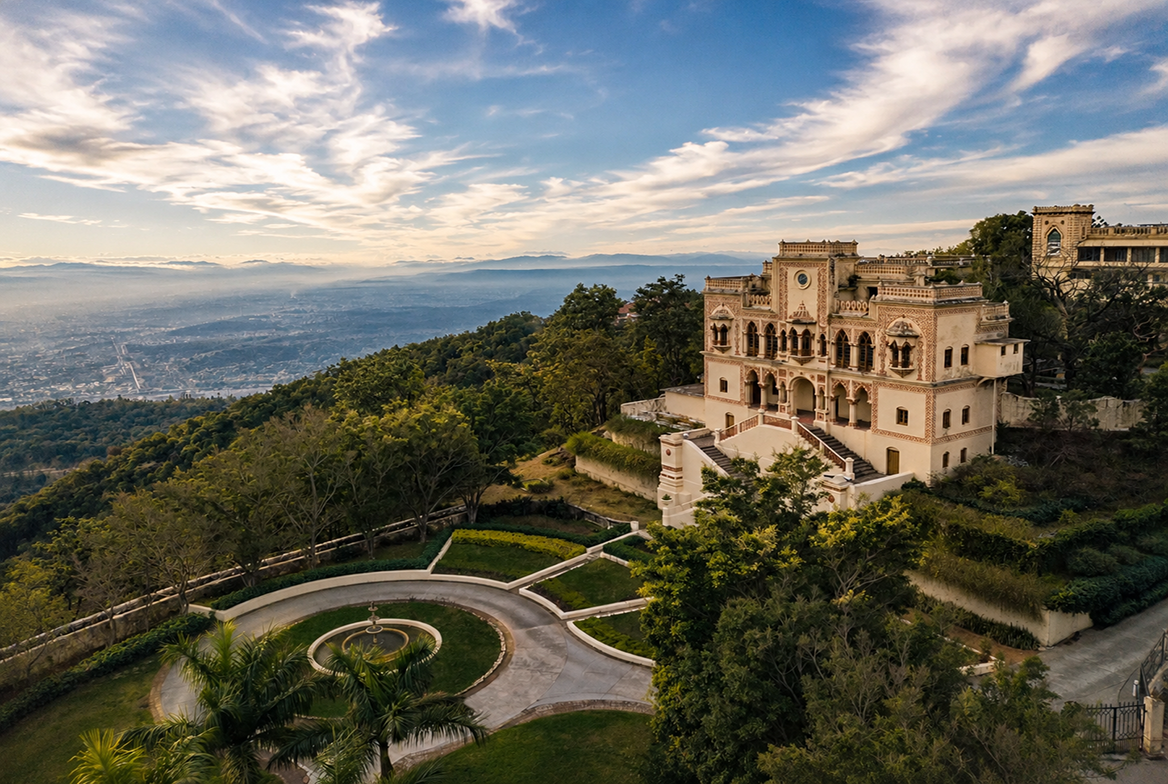
Five wellness retreats on earth earn the superlative in a literal sense. Ananda in the Himalayas is one of them.
It opened in 2000 as India’s first destination spa. Twenty-five years on, the rest of the category still measures itself against it.
Three things put Ananda in the top tier. A 100-acre palace estate above the Ganges. Ayurveda, yoga and Vedanta practised at depth rather than as decoration. And a hotelier’s grasp of how to make ancient discipline liveable for two weeks straight.
This is a look at one property, not a ranking.
A palace above the Ganges
Ananda sits at Narendra Nagar, in the Tehri Garhwal district of Uttarakhand, roughly 3,500 feet up. The estate covers 100 acres of sal forest and garden.
From the ridge you look down into the Doon valley on one side. On the other, the Ganges leaves the mountains and bends past Rishikesh, the town widely called the birthplace of yoga. The Shivalik range stacks up behind.
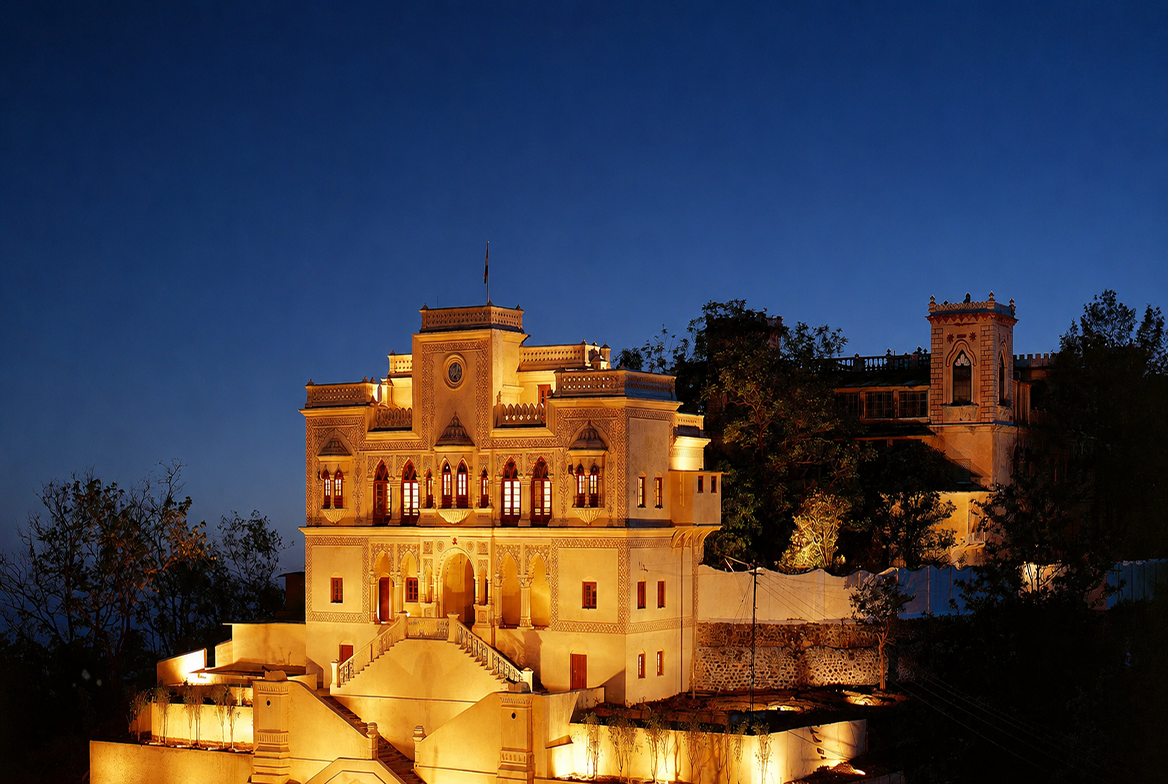
Maharaja Narendra Shah built the palace in the early twentieth century. He moved his capital here and named the new town after himself. A separate Viceregal Palace went up around 1910 and 1911, raised for a visit from the Viceroy of India. The Viceroy never arrived. The building stayed. Lord Mountbatten and other figures of the late Raj used it in the decades after.
The restored Viceregal Palace now serves as the historic centre of the retreat. Reception sits behind the original façade. Two World War I cannons flank the royal gateway. Original relief work survives on the walls.
The name comes from a person, not a brochure. Narendra Shah followed the mystic Ma Anandamayi and wanted her to stay at the palace. She refused to be housed in luxury. The royal family built her a simple hut, a kutiya, on the palace deck, and she used it while moving between her ashram at Haridwar and Narendra Nagar. Ashok Khanna named his spa after her. Ananda means bliss in Sanskrit. The hut still stands as a small museum. Guests are asked not to eat or drink on the deck out of respect.
The hotelier who built it
Ashok Khanna trained with Oberoi Hotels. He is a grandson of M. S. Oberoi, who founded the group.
In the late 1990s he went looking for a pollution-free site for a destination spa. His father knew the Maharaja and suggested the Narendra Nagar palace. Khanna visited on a wet, foggy day. By his own account the setting won him over rather than the architecture. The Ganga below carries a reputation for healing. Ayurveda is said to have originated in the Himalayas above.
Ananda opened in 2000 as India’s first luxury destination spa and set the template for the country’s wellness tourism industry.
The family still runs the property. Khanna’s daughter Aashica Khanna serves as executive director. The direction of travel has been depth rather than spectacle. Stays once ran a week. Many now run two weeks to two months, with diagnostics, outcome tracking and follow-up consultations through the year.
A philosophy, not a spa menu
Wellness organises the whole operation here. It is not an amenity attached to a hotel.
The system rests on four Indian sciences: Ayurveda, yoga, meditation and Vedanta philosophy. Emotional healing, modern diagnostics and Ayurvedic cuisine sit alongside them. The parts work as one method.
Every programme starts with consultation. An Ayurvedic physician assesses your dosha, your constitution under the Ayurvedic framework. A doctor reviews your history. Body composition analysis follows where relevant. Those readings then shape your therapies, your yoga and your food for the length of the stay.
Ananda treats causes rather than symptoms. This is why the serious programmes run in weeks rather than days. Over 60 specialists support the work: Ayurvedic physicians, yoga teachers, physiotherapists, emotional healing practitioners, traditional Chinese medicine practitioners, nutritionists and chefs trained in wellness cuisine.
The spa and its programmes
The Ananda Spa runs to roughly 25,000 square feet. It holds 24 treatment rooms, hydrotherapy areas, steam and sauna facilities, a fitness centre, a physiotherapy clinic and a heated outdoor lap pool.
The menu lists over 90 therapies, anchored by Ayurvedic ritual. Abhyanga applies synchronised warm-oil massage. Shirodhara pours a steady stream of oil across the forehead. Panchakarma delivers classical deep cleansing across a full 21 nights. Tibetan treatments, Western techniques and Ananda’s own signature therapies fill out the rest. Products are blended in house from indigenous oils, muds, clays and herbs, some grown in the estate’s Ayurvedic garden.
Book by programme rather than by treatment. Programmes run 7, 14 or 21 nights, all inclusive.
The foundational set covers Ayurvedic Rejuvenation, Holistic Detox, Yogic Detox, Panchakarma, Stress Management and Weight Management. A newer set addresses Sleep Enhancement, Pain Management, Rejuvenation and Immunity, hormonal rebalance, and women’s health across the menstrual, fertility and menopausal stages. Further protocols target autoimmune conditions, skin conditions, diabetes, cardiovascular disease and chronic respiratory issues.
Emotional healing goes further here than at most wellness resorts. Sound healing uses Tibetan bowls and gongs. Vedanta talks draw on the teaching of Swami Parthasarathy. Therapies include hypnosis, regression, inner child work and energy work. Returning guests tend to cite this element rather than the massages.
The shape of a day
The day starts early. A signature tea and a bowl of fresh fruit arrive first. Morning yoga and pranayama follow.
Consultations and treatments fill the hours around them, timed to your programme. The hydrotherapy circuit stays open between sessions: steam, sauna, chill plunge pool and a Kneipp foot bath.
Scheduled activities run through the week. Vedanta talks. Guided meditation. Cooking demonstrations. Nature walks. A weekly trek.
There is no nightlife. Dinner runs slow and the lighting stays low. Most guests sleep before ten.
Ananda protects the quiet with age rules. Children under 14 are not accommodated. Spa treatments and heat facilities are reserved for guests of 18 and over. Younger visitors take part in yoga, meditation, treks and the pool.
By the third or fourth morning the structure stops feeling like restriction. This is the intended effect.
Where you sleep
A six-month renovation led by Delhi-based designer Deepa Sama added a new room category and reworked several premier suites. The property now offers 64 rooms, eight suites and three villas across the 100 acres. Even at full occupancy the estate absorbs the numbers.
The design stays restrained. Calm palettes. Natural materials. Motifs drawn from local Himalayan craft, including Yantric and Gond art. Balconies frame either the gardens or the valley.
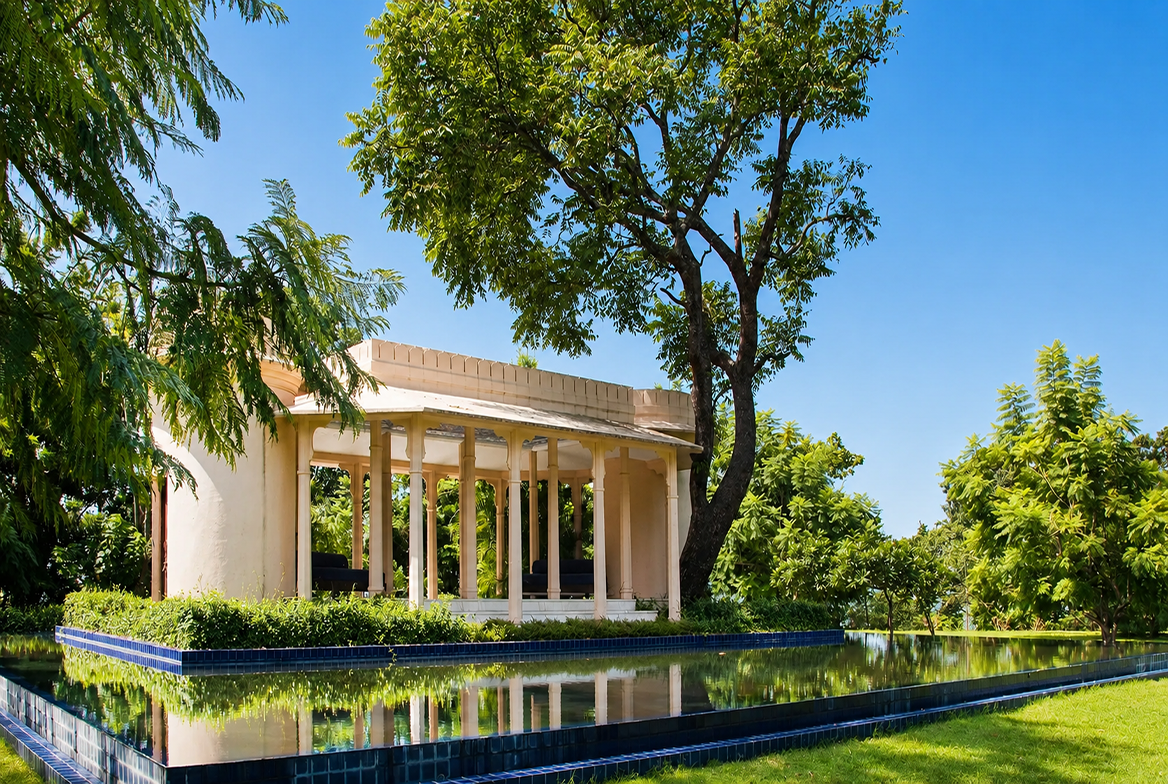
Deluxe rooms run to around 45 square metres with private balconies. Garden Suites add secluded private gardens, useful for solo practice. The Viceregal Suite occupies the historic palace with antique furnishings, a lawn and a rooftop gazebo above sloping gardens. The Ananda Suite offers wide living space and a private gazebo with valley views.
Three villas sit at the top of the range, named after the Ganga and the Himalayan ranges. Each holds a private temperature-controlled pool among the sal trees, a spa-style bathroom and butler service.
The table
Food follows the same logic as the treatments. Meals are personalised to your dosha and to the goals of your programme.
The kitchen sources fresh seasonal produce from organic farms around Tehri and Dehradun. Herbs come from the estate garden. Menus cover Indian, Asian and European dishes and change roughly every four months with the season. Long stays make variety a structural requirement rather than a courtesy.
You have four places to eat. The Restaurant serves as the main room, decorated with Yantric art. The Tree Top Deck sets tables outdoors among the sal canopy, with views over the forest and the Doon valley. The Pavilion handles drinks and light food. The Tea Lounge occupies the Viceregal Palace, its walls hung with portraits of the Maharajas and the dignitaries who visited them. Poolside and private dining are available on request.
Beyond the gates
Rishikesh sits below the estate. The retreat curates access rather than pushing it.
The main excursion is the evening Ganga Aarti, the river worship ceremony of lamps, fire and chant performed on the banks. Programmes of seven nights or longer often include a complimentary visit. The alternative is a dawn trek to the Kunjapuri Devi temple, set on a peak with views of Himalayan summits at sunrise.
Closer options include guided forest walks, birdwatching and white water rafting on the Ganges. None of it is compulsory.
Recognition, earned over decades
Condé Nast Traveller readers voted Ananda the number one destination spa in the world within five years of opening. The property has placed at or near the top of that poll repeatedly since, and appears on comparable lists from The Telegraph and the Wellness Travel Awards.
Press coverage has reported guests including Oprah Winfrey, Melinda French Gates, King Charles, Kate Winslet and Uma Thurman. Those figures have the whole world available to them and keep returning to a ridge above Rishikesh.
The retreat marked 25 years in 2025 with new programmes in women’s health and diagnostics, plus new suites. No fireworks. More depth.
Who Ananda is not for
Skip it if you want a holiday rather than a programme. The value sits in the 7 to 21 night structures. A two-night stop buys a beautiful hotel with a good spa and little of the point.
Skip it if you drink with dinner, want a late night, or travel with young children. The age rules are firm and the rhythm is built around early sleep.
Skip it if Ayurveda strikes you as soft science. Panchakarma involves purgation, restricted diets and a physician directing what you eat for three weeks. Guests who resist the framework spend a great deal of money on a view.
Access takes effort too. Reaching the estate means a flight from Delhi and a mountain drive. Monsoon months bring heavy rain to the foothills.
Practicalities
Fly Delhi to Jolly Grant Airport at Dehradun, around 45 minutes in the air. A drive of roughly 40 to 60 minutes follows, up through the hills. Ananda arranges helicopter transfers from Delhi for guests who prefer to skip the road.
September to March delivers the most comfortable weather, with mild, clear conditions in the foothills. Monsoon months bring rain and dense green.
On cost, price a specific programme rather than a nightly rate. Ananda sells all-inclusive 7, 14 and 21 night programmes covering accommodation, spa cuisine, consultations, treatments and scheduled activities. Published starting figures across booking platforms range from under $1,000 to around $2,000 per night depending on room category, season and programme, so treat those numbers as directional and request a quote for your dates. Taxes of 18 percent GST on rooms, meals and spa are generally folded into quoted programme rates.
The last word
Plenty of resorts sell a massage with a view. Ananda sells a method: a coherent system of healing, practised by people who believe in it, inside a palace estate above a river millions hold sacred.
Strip out the awards and the guest list. What remains is a property taking the oldest questions about how to live well and answering them with unusual rigour.
Book the 14 nights. The place rewards commitment over curiosity.




Leave A Comment