

Ask a seasoned traveler where real luxury lives now and you will rarely hear a hotel name first. You will hear about a house on a headland with no one else in sight, or a villa where the staff knew the answer before the question. The reference point has moved. For most of the last century the great hotel was the prize — the address worth dropping into conversation, the lobby worth being seen crossing. Today the prize is the opposite of an address: it is being not found. And the moment privacy becomes the thing money is chasing, the old certainty about villas and hotels dissolves into a genuine question.
Neither format wins this on merit alone. Each is superb at what the other struggles with, and the useful question is not which is better but which is right for this traveller, on this trip. What follows is where the two actually diverge — and why the line between them is thinning by the season.
The shift that re framed the question

The private villa is not new. What is new is the cultural weather that has made it the default aspiration. Every serious 2026 forecast circles the same idea, sometimes under the faintly ridiculous banner of “hushpitality”: status now attaches to privacy, not visibility. The old flex was being seen in the right room. The new one is that no one could find the room, or you.
The numbers track the mood, if loosely. Researchers disagree on the exact size — methodologies differ, and estimates for the luxury villa and vacation-rental market land anywhere from the mid-twenties to around thirty billion dollars for 2024 — but they agree on the trajectory, which is a rough doubling over the coming decade. The reasons given never change: privacy, space, personalization, longer stays, and groups traveling together.
Feeding all of it is wellness. The Global Wellness Institute put the global wellness economy at roughly $6.3 trillion in 2023, growing faster than the economy around it, and a real slice of that money now decides where people sleep rather than merely how they train. The survey-based headlines here — the widely cited finding that most travelers intend to build a trip around recovery — are directional rather than exact, but the direction is not in doubt.
None of this means villas have won. It means the yardstick moved. Measured by display, the hotel was always going to win. Measured by time, quiet, and the freedom to vanish, the contest is open again, and it has to be scored on new terms.
Privacy and seclusion: the villa’s structural advantage

On the quality that now defines the whole category, the villa simply starts ahead. Its privacy is built in, not granted. No lobby to be seen in, no restaurant full of other guests, no shared corridor. The day runs to your clock, watched by no one. For anyone whose ordinary life involves being observed, that is not a luxury feature. It is the reason to book.
Villas also fix the thing hotels do clumsily: the group. Families across three generations, a cluster of old friends, a big anniversary — these settle far more easily around one pool and one long table than across a scatter of suites and a reserved corner of the dining room. The whole phenomenon of the hotel “buyout,” where a party takes the entire small property for a week, is really an admission that for some trips a villa is the shape people want.
Seclusion has a cost worth stating plainly. Private can slide into isolated. The independence that feels liberating on arrival can feel like exposure the moment something breaks — a failed generator, a strange town, a worrying symptom at two in the morning and no front desk to ring. Strong operators close that gap with a genuinely capable local concierge. Weak ones hand you the problem and disappear. A great hotel, whatever else it lacks, is privacy with a net beneath it.
Service: where the hotel still wins

If privacy belongs to the villa, service belongs to the hotel, and the margin is wider than glossy photography suggests.
Luxury hospitality is, in the end, a headcount business. The benchmarks make it plain: established luxury hotels tend to run two to three staff per room, and at the ultra-luxury end — the Amans, the Sonevas — the ratio climbs toward one to one and occasionally past it. That is what pays for the quality everyone advertises and few define: anticipatory service, the kind where a settled, familiar team meets the need before you have named it. The truest sign of a great hotel is not the marble. It is the tenure of its people — the ones who remember how you take your coffee and which table you like.
Villa service is a far less predictable thing, and this is the part the marketing skips. A standard luxury villa may run nearer one staff member to every four or five guests: fine for cleaning and cooking, short of the seamless invisibility of a top hotel. You can pay to climb — a full estate team with chef, butler, and host can approach the ratios of a resort — but that tier is an extra, usually billed as one, and it rides on a single household rather than an institution with a reputation to guard.
The result is range. Choose well and a villa feels like a private home staffed by people devoted to you. Choose blind and self-catering reasserts itself, and the familiar litany of rental disappointments — the listing that oversold, the host who vanished — is a reminder that the floor sits lower, and the swings run wider, than at a hotel with a name to lose.
There is a subtler point beneath the ratios. The promise of the staffed villa is effortlessness, yet somebody is still running the rota, stocking the kitchen, letting strangers in each morning to cook your breakfast. A hotel dissolves that labour into a system you never see. A villa, however well staffed, can quietly cast you as the manager of the house. To some travelers that command is the luxury. To others it is exactly the job they flew away to stop doing.
The texture of the stay
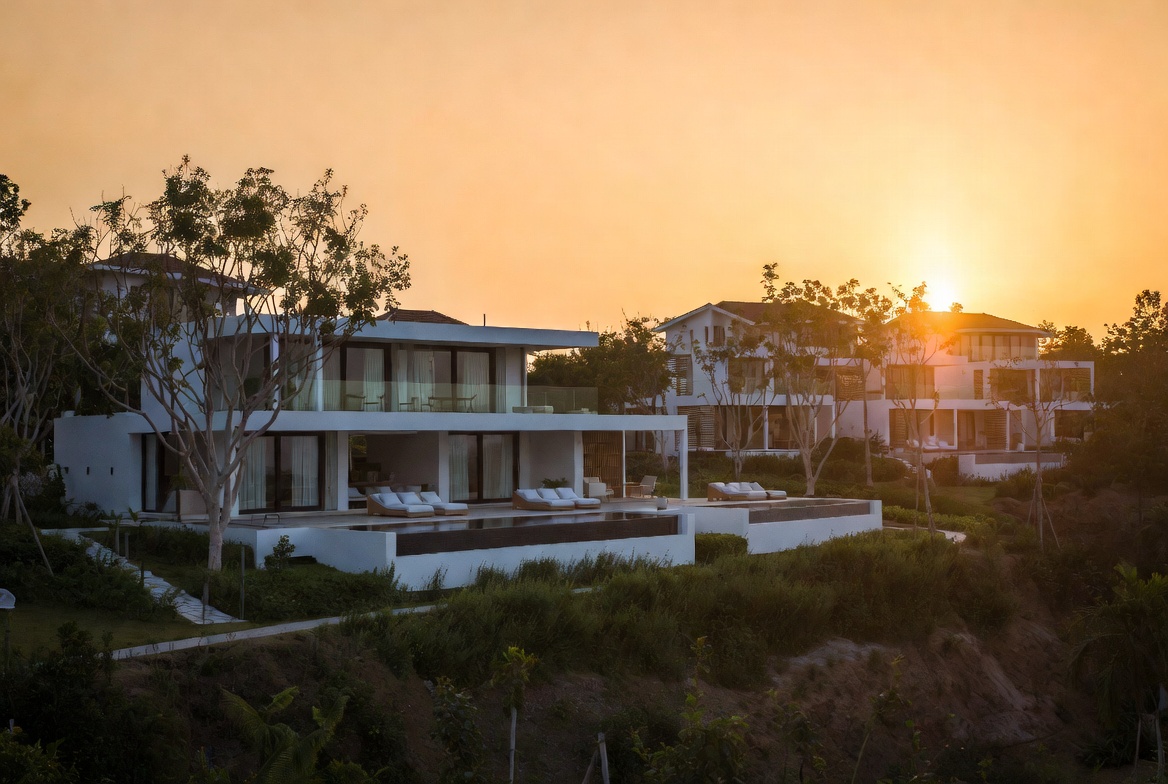
Underneath the comparisons sits a difference of feeling that no ratio will show you.
A villa hands you the pen. Breakfast at eleven, dinner when the mood and the cook agree, a day with no shape but the one you give it. A great hotel offers the reverse pleasure: being carried, the day arranged so gently around you that no decision is ever forced. One is the luxury of authorship, the other the luxury of surrender. Both can be deeply restful. They are not the same rest, and most people, pressed to be honest, know which one they want.
There is a social difference too. The best small hotels offer a mild, optional sociability — a few other guests, a bar where a conversation can happen if you want it and won’t if you don’t. A villa offers none of that. It is your party and no one else. Whether that reads as heaven or as too much of the same faces depends entirely on the company you brought and how much of the world you were trying to escape.
What you are actually paying for
Price comparisons here are treacherous, and anyone quoting one nightly rate is usually leaving out the numbers that matter. A villa’s headline figure can look like a steal per head once a group divides it, but the real total shows up afterwards: the staffing tier, the chef’s shopping, transfers, the local fixer, all the things a hotel quietly rolls into a single bill. The hotel’s rate is higher per room and more honest about its contents, and at the top of the market it already includes the spa, the programming, the childcare, and the service depth a villa itemises.
The cleaner lens is trip shape, not nightly rate. Six people for ten days: a well-run villa is often the cheaper and better answer. A couple for four nights who want to be looked after and do nothing at all: a hotel almost always returns more luxury for the money, because staffing a whole private house rarely justifies itself over two guests and a long weekend.
The binary is collapsing
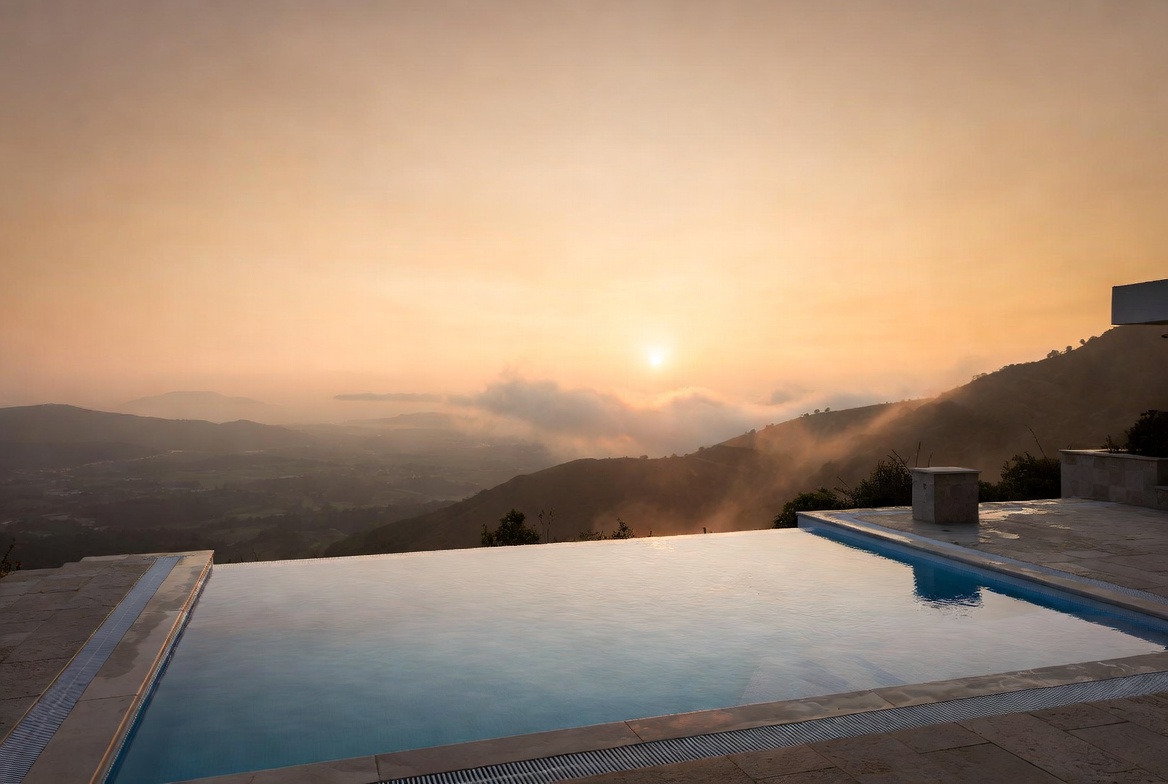
Here is what the villa-or-hotel argument keeps missing: the industry heard the question and is quietly answering “both.”
The properties worth watching now are frankly hybrid — villas built on a hotel’s frame. Some resorts are constructed entirely from private villas. Soneva’s small Maldivian retreats, for instance, give each villa its own staff — a private chef, a personal “guardian” — at a staff-to-room ratio well beyond the luxury norm. That is villa privacy fused to hotel service.
The movement runs both directions. The grand hotel names are spreading into branded residences and standalone villas — Aman across some twenty countries, Six Senses under its “best of all worlds” banner, Belmond with its villa collections — so a guest can take a private house and still reach the resort’s kitchen, spa, and team without leaving the grounds.
This middle is where a lot of the sharpest money is heading, because it removes the main objection to each side. It lends the villa the institutional service and safety net it lacks, and lends the hotel the space and built-in privacy it cannot fake. For a growing number of travellers the framing is simply wrong. The answer is a villa within a hotel.
Who each is really for
Cleared of marketing, the choice comes down to a handful of honest questions.
A private villa suits you if you are traveling as a group or a family, you prize self-direction and shapeless days, architectural privacy matters more to you than flawless service, you are staying a week or longer, and you are prepared to vet the operator and pay for real staffing rather than trust it to materialize. It rewards the traveler who wants to run the days.
A luxury hotel suits you if you are a couple or traveling solo, you came to be cared for rather than to host, you would trade four spare bedrooms for anticipatory service and a safety net, your stay is short, and the goal is doing nothing, perfectly. It rewards the traveller who wants to be carried.
The hybrid — a villa inside a resort, or a branded residence — suits you if you want both and can afford to skip the compromise: privacy by architecture, service by institution.
The point underneath the comparison
It helps to remember what the question is really testing. Quiet luxury is, at bottom, a redefinition — a shift away from luxury as accumulation and display toward luxury as time, attention, and restraint. Held to that standard, neither the villa nor the hotel owns the word. A villa can be a badly run letdown with a beautiful pool. A hotel can be a place of complete calm where you are known and never watched. What divides the real thing from the performance is not the format. It is whether the place was built around the scarce things — space, silence, privacy, care — or merely dressed to resemble them.
So the question was never villa or hotel. It is whether the place in front of you, of either kind, has arranged itself to give you back your own time and attention. Get that right and the architecture is a footnote. Get it wrong and no quantity of marble or infinity edge will rescue the stay. The quiet has to come from the way a place is run, not from whether it keeps a front desk.



Leave A Comment